






What Plate Carrier Does the Army Use

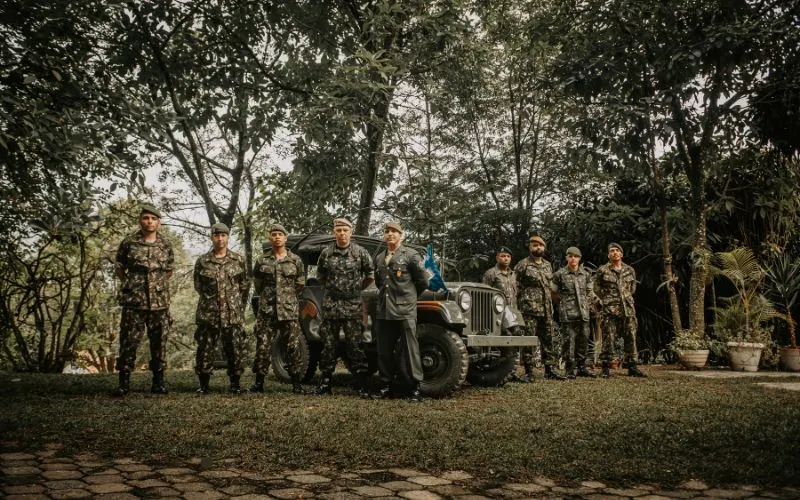
Regarding military equipment, few items are as important as the plate carrier. It is the protective vest that soldiers wear to protect their vital organs from ballistic threats such as bullets and shrapnel. However, not all plate carriers are created equal. Each branch of the military uses specific plate carriers designed to meet the needs of soldiers in different types of combat situations. The plate carrier system was developed over the years for the U.S. Army to improve functionality, comfort, and protection. This blog post will detail the history, design, and purpose of the U.S. Army’s plate carrier and an overview of the different features and roles in modern military operations.
What Is A Plate Carrier?
A plate carrier is an armor vest that carries ballistic plates to safeguard against high-speed projectiles or shrapnel. It is usually made from thick, durable material such as nylon or Cordura, which is lightweight, flexible, and adjustable. The plates inside the carrier are made of ceramic, steel, or polyethylene. They absorb and stop bullets in their path to prevent body penetration.
Unlike traditional load-bearing vests, a plate carrier is purpose-built to balance ballistic defense with freedom of movement, making it indispensable for military personnel operating in high-threat environments.
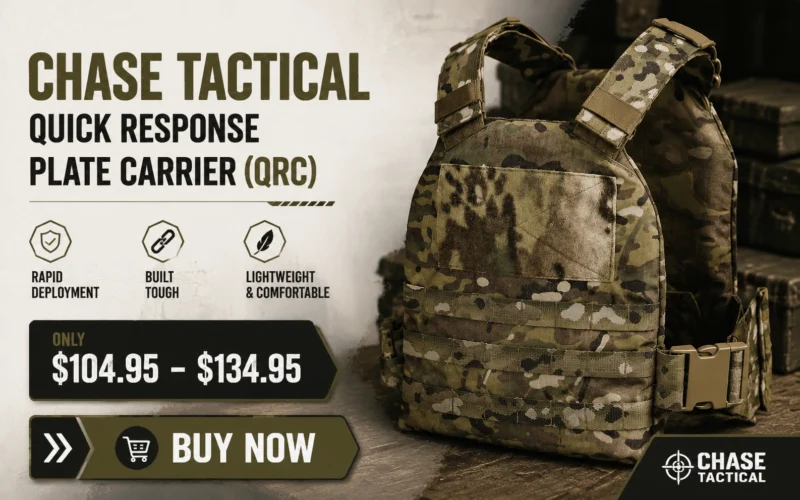
The plate carrier provides ballistic protection but allows soldiers to carry additional gear, such as magazines, medical supplies, and communication devices. Thus, it is a multifunctional tool that combines safety and utility. Modern plate carriers also feature integrated pockets, attachment points, and modular webbing systems that allow troops to configure their load based on mission requirements, making each setup as individual as the soldier wearing it.
Evolution Of The U.S. Army Plate Carrier System
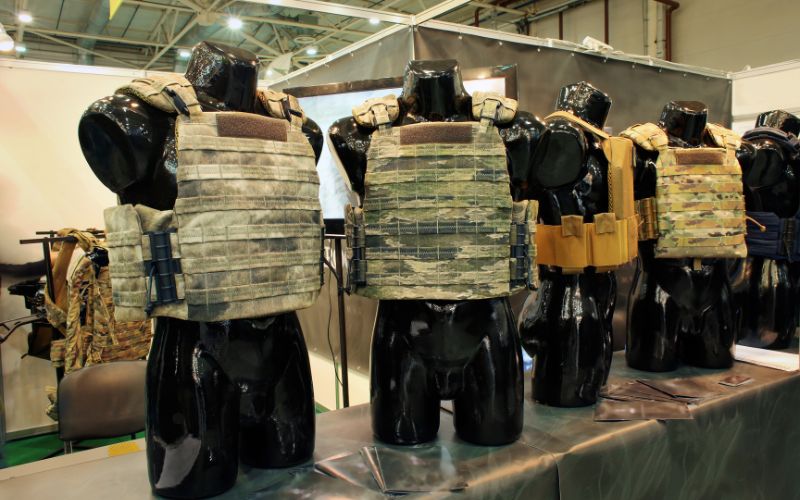
Over the past two decades, the U.S. Army has changed its plate carrier systems in response to the evolving demands of
modern warfare. From the large, cumbersome, and restrictive body armor that soldiers wore, the change in materials and design resulted in lighter, more modular, and more effective systems.
One major change was the introduction of the Interceptor Body Armor (IBA) system in the latter half of the 1990s. It featured a vest with soft panels on the front and small hard armor plates on both sides and the back. While the protection was solid, it was too bulky and uncomfortable, and it was less flexible than the soldier’s needs for different missions.
The IOTV later replaced the IBA. Compared to the IBA, the IOTV significantly improved comfort and protection. It was lighter, more breathable, and more flexible, allowing greater mobility and a wider range of operations. More parts of the IOTV were adjustable, allowing soldiers to conveniently modify the vest.
However, this continued to require further evolution, especially amid the emerging threat of conventional and asymmetric warfare. This, in turn, called for the development of the Soldier Plate Carrier System.
More recently, the Army has also fielded the Modular Scalable Vest (MSV), a next-generation system designed to address the limitations of both the IOTV and early SPCS configurations. The MSV is lighter than the IOTV, offers improved scalability across threat levels, and is built to integrate with the Army’s ongoing body armor modernization programs. Together, these systems represent a generational leap in how military personnel carry protection in the field.
Soldier Plate Carrier System (SPCS)
The SPCS is the current standard-issue plate carrier for United States Army soldiers and was designed to be a sleeker, more customizable carrier than previous versions. The first generation of these emerged around 2010, driven by modern warfare requirements for lighter, more efficient protective gear that enabled operations and mobility without compromising performance.
The SPCS is meant for combat missions where mobility, speed, and agility are paramount. It offers protection from ballistic threats and is designed to be worn with additional gear, such as a helmet, gloves, and a tactical belt. Thus, it offers comprehensive protection and functionality.
A fully loaded SPCS with Level IV ESAPI plates typically weighs between 20 and 30 pounds (9 to 14 kg), depending on the number of side plates, pouches, and accessories attached. The carrier itself is significantly lighter than the IOTV, a key reason it was adopted for high-tempo operations requiring sustained movement. The SPCS is available in standard military colorways including Multicam and OCP, with size options ranging from small to extra-large to fit different troop builds.
In addition to providing protection, the plate carrier serves as a platform for carrying essential equipment. Various pouches for attaching and carrying ammunition, radios, and medical kits, among other items, are essential to a soldier’s survival in combat. For these reasons, the plate carrier is one of the most valuable pieces of gear for any soldier.
From counterinsurgency operations to conventional warfare scenarios, the SPCS has proven adaptable across a wide range of environments and mission profiles. It does not guarantee complete protection against all ballistic threats, but it significantly reduces the risk of lethal injury while preserving sufficient mobility for troops to remain effective in dynamic situations.
Key Features Of The Soldier Plate Carrier System
The Soldier Plate Carrier System (SPCS) ensures that U.S. Army soldiers receive a balance of protection, comfort, and functionality in high-stress combat situations. Its modular structure and advanced materials allow soldiers to personalize gear while maintaining mobility and effectiveness. The SPCS’s modular design is one of the main features that make it essential to modern military armor.
One of SPCS’s benefits is its modularity. The plate carrier is flexible, so soldiers can adjust the vest to fit their specific mission needs. This is achieved by adding MOLLE webbing to the vest’s front, back, and sides, allowing pouches, holsters, and other accessories to be attached. This modular system allows soldiers to carry extra ammunition, medical supplies, and tools without bulky backpacks or other equipment.
Ballistic Protection and Plate Materials
The SPCS is significantly lighter and more streamlined than older body armor systems. This is essential for soldiers who must move quickly and efficiently in combat scenarios. While providing adequate protection against various ballistic threats, the SPCS improves mobility, helping soldiers maintain high endurance and performance during long missions.
Ceramic and Steel Armor Plates
Ceramic plates, most commonly the Enhanced Small Arms Protective Insert (ESAPI), are the Army’s standard choice for rifle-threat protection. Ceramic composite construction allows these plates to defeat armor-piercing rounds by fracturing the projectile on impact, dissipating energy before it can penetrate. They meet Level IV NIJ standards and are lighter than equivalent steel options, though they are less resistant to repeated impacts. Steel plates are more durable across multiple hits but add significant weight to the carrier, making them less common in standard Army issue for deployed troops.
Polyethylene (PE) Plates
Ultra-high-molecular-weight polyethylene (UHMWPE) plates offer a weight advantage over both ceramic and steel. PE plates can meet NIJ Level III or Level IV standards at roughly half the weight of ceramic equivalents, which is why they are increasingly common in modular configurations where load management is critical. The SPCS accommodates standard SAPI/ESAPI plate cuts, making it compatible with ceramic, PE, or multi-curve plate options from multiple manufacturers, including those that meet U.S. military procurement specifications.
Lightweight and Low-Profile
The SPCS is significantly lighter and more streamlined than older body armor systems. This is essential for soldiers who must move quickly and efficiently in combat scenarios. While providing adequate protection against various ballistic threats, the SPCS improves mobility, helping soldiers maintain high endurance and performance during long missions.
Improved Comfort and Weight Distribution
The SPCS has ergonomics and comfort for soldiers in its design. The internal structure of the vest features padded shoulder straps and a padded cummerbund to ensure even weight distribution across the torso. This reduces fatigue and friction or chafing for soldiers when they have been wearing the carrier for many hours.
In addition, the SPCS uses moisture-wicking materials to keep soldiers cool and dry, even in hot or wet environments. This will make the plate carrier comfortable for long missions in deserts or jungles.
Quick Release Mechanism
Quick release is another important feature of the SPCS. It can be used to quickly remove the plate carrier in case a soldier needs to do so for an injury or evacuation. This quick-release mechanism is initiated by pulling a cord or handle, disengaging the vest from the soldier’s body. Thus, if needed, the soldier can get out of his armor within seconds without wasting precious time.
Modularity, MOLLE Integration, and Compatibility
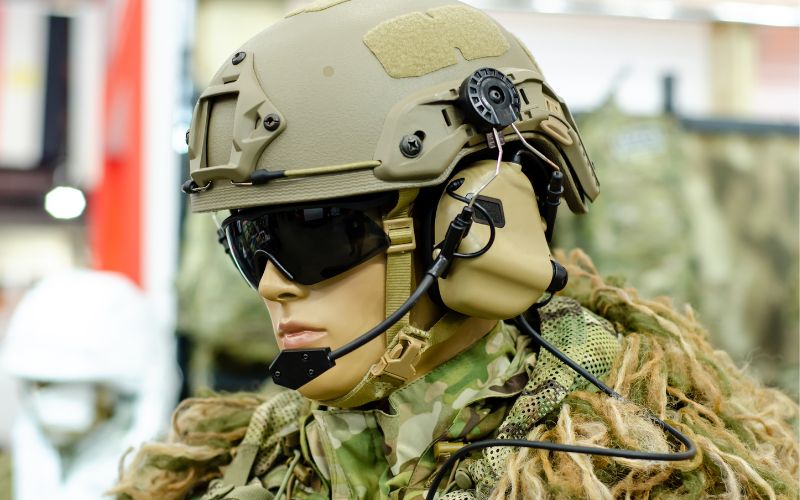
The SPCS is designed to work seamlessly with other military equipment, including helmets, tactical belts, and hydration systems. Its modular design allows for easy integration with other components of a soldier’s loadout, ensuring that everything is securely attached and accessible during combat.
Configuration, Pockets, and Civilian Options
The SPCS supports a wide range of configuration options through its MOLLE webbing and integrated pockets. Soldiers can attach magazine pouches, dump pouches, medical kits, radio pouches, and admin panels to create a loadout tailored to the specific mission. The load-bearing design distributes weight evenly across the torso, reducing strain during extended patrols.
While the SPCS is military-issue, civilians can legally purchase and use equivalent plate carriers that share the same MOLLE architecture and plate compatibility. Tactical gear brands including Chase Tactical, produce plate carriers designed to the same functional standards as military issue systems, offering law enforcement, security professionals, and preparedness-minded civilians access to the same level of ballistic protection and modularity used by U.S. Army troops in the field.
SPCS vs. IOTV vs. MSV: How Army Plate Carriers Compare
Understanding how the Army’s plate carrier systems differ helps clarify why the SPCS became the dominant choice for combat operations and where the MSV fits into the current defense posture. The following comparison covers the three main systems used by U.S. Army military personnel.
| Feature | IOTV | SPCS | MSV (Modular Scalable Vest) |
| Introduced | 2007 | 2010 | ~2019 |
| Primary Purpose | Full-torso protection, all-threat environments | Mobility-focused combat operations | Scalable protection, modular configurations |
| Plate Compatibility | ESAPI / XSAPI (SAPI cut) | ESAPI / XSAPI (SAPI cut) | ESAPI / XSAPI (SAPI cut) |
| Weight (carrier only) | ~13–16 lbs | ~5–8 lbs | ~5 lbs |
| Quick Release | Yes (limited) | Yes | Yes |
| MOLLE Webbing | Yes | Yes | Yes |
| Side Plate Pockets | Yes (integrated) | Optional | Optional (modular add-on) |
| Best Suited For | Full-threat static operations | High-mobility combat missions | Variable-threat, scalable missions |
The IOTV provided the most comprehensive out-of-the-box coverage but at a significant weight penalty that hurt troop mobility. The SPCS addressed this by stripping back the carrier to its core function: holding front and rear plates while keeping the soldier mobile. The MSV continues this trend, offering a system that can scale from minimal protection in low-threat environments up to full Level IV coverage in high-threat areas, making it the most versatile of the three.
The U.S. Army’s Soldier Plate Carrier System represents the culmination of decades of military body armor technology development. Designed to balance protection, comfort, and mobility, the SPCS is a versatile, modular system that enables soldiers to stay safe and effective in various combat environments. As threats evolve and warfare continues to change, plate carriers will likely continue to improve, ensuring that military forces have the best protection available in the field.
Conclusion
The U.S. Army’s Soldier Plate Carrier System represents the culmination of decades of military body armor technology development. Designed to balance protection, comfort, and mobility, the SPCS is a versatile, modular system that enables soldiers to stay safe and effective in various combat environments. As threats evolve and warfare continues to change, plate carriers will likely grow, ensuring that soldiers have the best protection in the field.
Frequently Asked Questions
What is the Name of the Army Plate Carrier?
It is called the Soldier Plate Carrier System (SPCS). This tactical gear is the best military equipment, featuring high-quality body armor technology that provides advanced protection and agility for soldiers in challenging environments.
What Plate Carrier Do Special Forces Use?
Special forces selection ensures you receive elite-unit equipment tailored to your mission and its tactical requirements. You would be issued high-performance equipment such as LSAPP, IOTV, and MSV, which is engineered for mobility and adaptability in complex environments, maximizing your mission effectiveness and survivability.
What Level Plate Does the US Army Use?
You are interested in how the Army’s plate level compares. The Army uses Level IV plates in its plate carriers, which can withstand armor-piercing rounds. Plate carrier models come with accessories that increase protection in high-threat situations.
How Much Does an Army Plate Carrier Weigh?
A fully configured Army plate carrier with Level IV ESAPI plates typically weighs between 20 and 30 pounds (9 to 14 kg), depending on the number of side plates attached and the amount of gear loaded onto the MOLLE webbing. The SPCS carrier alone weighs considerably less than the older IOTV, which was one of the primary reasons the Army transitioned to it for combat operations. Soldiers managing weight during long patrols often run a lighter setup with only front and rear plates, adding side plates when entering higher-threat environments.