





Ballistic Shields vs. Bulletproof Vests: When to Use Each

To protect your safety, it is crucial to guard yourself against weapons. Firearms can pose a risk either directly or indirectly, and sometimes accidents can happen when others use firearms around you. Therefore, two commonly used types of protective gear guard people against the onslaught of bullets: ballistic shields and bulletproof vests.
Understanding when and why to use each of these protective tools is key for those who may find themselves in dangerous, high-risk situations. This guide explores the differences between ballistic shields and bulletproof vests, explains how each works, covers NIJ protection levels, and helps you decide when to choose one over the other or use both together.
What Are Ballistic Shields?
A ballistic shield is a portable defensive device carried by law enforcement officers, military personnel, and security teams during high-risk operations. Designed to stop or deflect bullets, shrapnel, and other projectiles, ballistic shields come in a range of sizes, from compact handheld models to full-torso-coverage shields used in SWAT entries. Most are large enough to protect an operator’s torso and head simultaneously, giving them a significant tactical advantage over body armor alone.
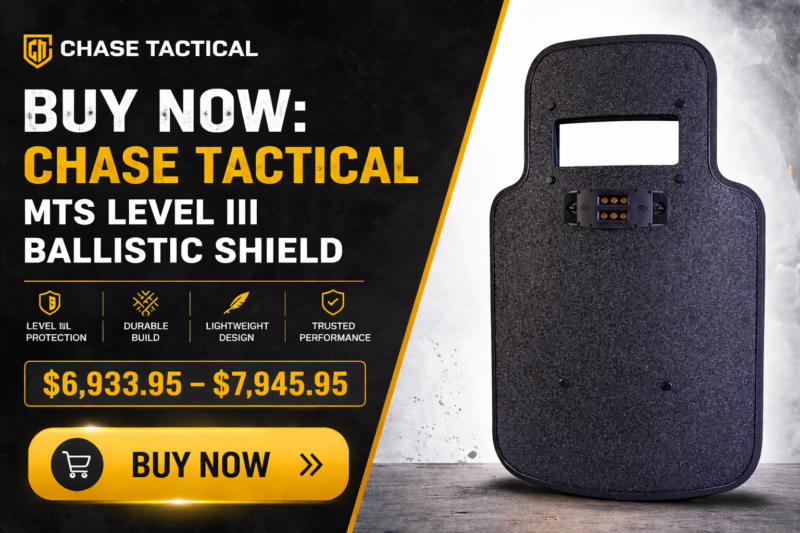
Ballistic Shield Materials & Construction
The level of protection a ballistic shield offers depends almost entirely on the materials used in its construction. Modern shields are engineered from several advanced ballistic-resistant materials, each offering a different balance of weight, durability, and protection level:
- Kevlar (aramid fiber): The most widely recognized ballistic material, Kevlar absorbs and disperses bullet energy through a tightly woven fiber structure. It is commonly used in Level IIIA shields designed to stop handgun rounds including 9mm and .44 Magnum.
- Ultra-High-Molecular-Weight Polyethylene (UHMWPE): Lighter than steel and extremely resistant to ballistic impact, UHMWPE is used in higher-rated shields where weight reduction is critical for operator mobility. It is often found in Level III- and Level IV-rated shields.
- Polycarbonate: Transparent polycarbonate is used in vision ports (viewports) and see-through riot shields, allowing operators to observe threats while maintaining ballistic protection.
- Steel: Heavy but highly durable, steel shields offer robust protection against a wide range of rifle threats. However, their weight limits mobility in fast-moving tactical operations.
- Ballistic fiberglass: Often used as a backing layer in composite shields, ballistic fiberglass adds structural rigidity and helps prevent fragmentation on bullet impact.
Most tactical-grade shields also feature integrated handles or arm straps for operator control, reinforced viewport windows for visibility, and carriers or bags for transport and storage. The construction method — whether the layers are woven, laminated, or compressed — directly affects both the shield’s protection rating and its overall weight.
When To Use Ballistic Shields
Ballistic shields are extremely useful when individuals must protect themselves from incoming fire while advancing through a potentially hostile environment. Some of the common scenarios where ballistic shields are often used include the following:
Active Shooter Incidents
Ballistic shields ensure officers have greater protection when engaging a shooter, such as when a law enforcement team or SWAT arrives at an active scene. The shields help officers maneuver close to the potential threat while facing as little firing as possible toward themselves.
Tactical Operations
In close-quarters battles and raids in military and police tactical operations, ballistic shields are typically used. This shield affords operators a tactical advantage by allowing them to shelter when clearing a room or performing operations in hostile areas. For a deeper look at how shields are deployed in practice, see our guide to ballistic shields in SWAT and tactical operations.
Crowd Control
During civil unrest or protests, law enforcement may deploy ballistic shields to create a defensive barrier between officers and a potentially violent crowd. Shields provide protection against thrown objects, projectiles, and gunfire if a riot situation escalates into an assault on officers.
VIP Protection
In VIP or dignitary protection details, ballistic shields can be deployed to protect the individual of interest when a credible threat is present. The shield can be positioned before the VIP to safeguard them from harm.
What Are Bulletproof Vests?
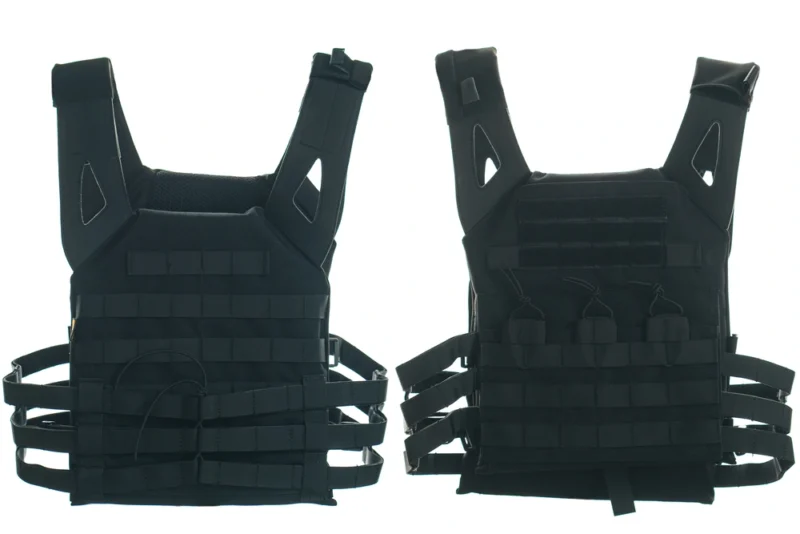
A bulletproof vest, or ballistic vest, is body armor designed to protect an individual’s vital organs from gunfire. Law enforcement officers, military personnel, and private security agents wear it as part of their standard uniforms. The vest consists of layers of woven or laminated materials such as Kevlar, Dyneema, or other high-strength fibers, which absorb and disperse the bullet’s energy on impact.
Bulletproof vests are designed to be worn over the torso, covering key areas such as the chest, abdomen, and back. Depending on the rating, the most advanced vests offer protection against a wide range of bullets, from handguns to high-powered rifles.
When To Wear Bulletproof Vests
Bulletproof vests are generally worn as part of an individual’s regular gear and provide everyday protection in high-risk environments. Here are several situations in which bulletproof vests should be used:
Routine Patrols
Law enforcement officers, security guards, and military personnel often wear bulletproof vests on routine patrols. This provides them with constant protection against potential threats without restricting their ability to move freely.
Combat Scenarios
Bulletproof vests are essential in military combat scenarios, safeguarding soldiers against gunfire from various weapons. Depending on the threat level, a soldier’s vest might be upgraded to offer protection against higher-caliber bullets or explosive fragments.
Police Operations
Police officers conducting traffic stops, arresting suspects, or investigating crimes in potentially dangerous areas often wear bulletproof vests as part of their standard gear to mitigate the risk of being shot.
High-Risk Situations
Bulletproof vests are essential for individuals facing high-risk environments, including undercover officers, security personnel operating in hostile territories, and those engaged in law enforcement or military operations where gunfire is a constant threat. Their concealable, wearable design means protection is always in place without requiring the operator to carry additional defensive equipment.
NIJ Protection Levels: Shields vs. Vests
Both ballistic shields and bulletproof vests are rated under the NIJ (National Institute of Justice) ballistic protection standard. Understanding these levels is critical to selecting the right protection for a given threat environment.
| NIJ Level | Threats Stopped | Common Use |
| Level IIIA | 9mm, .44 Magnum, most handgun rounds | Everyday patrol vests, entry-level shields |
| Level III | 7.62mm FMJ rifle threats, 5.56mm | SWAT shields, tactical plate carriers |
| Level IV | Armor-piercing rifle rounds (.30 cal AP) | Military operations, high-threat shields |
Ballistic shields can be rated from Level IIIA through Level IV, depending on the materials and construction. A Level IIIA shield is sufficient for most law enforcement scenarios involving handgun threats, while Level III shields are recommended when rifle threats are a realistic possibility — such as in active shooter situations or SWAT operations. Most standard bulletproof vests worn daily are rated Level IIIA; upgrading to Level III or IV requires adding hard armor plates.
Key Differences Between Ballistic Shields And Bulletproof Vests
Both ballistic shields and bulletproof vests are protected from fire but for different purposes in different circumstances. The following are the primary differences:
1. Coverage Area
Ballistic Shields protect the entire front of an individual’s body, including the torso, head, and sometimes legs. This can offer more protection in dangerous situations where a person faces multiple threats.
Bulletproof vests typically cover the human torso and protect essential organs completely. Thus, if shot, this clothing protects internal vulnerable organs, including the lungs, liver, and heart, which are exposed to fatal risks.
2. Mobility
Ballistic Shields: Due to their size and weight, they restrict mobility, particularly when maneuvering tight spaces. However, their large surface area offers considerable protection when officers or military personnel must create a barrier or shield from gunfire during operations.
Bulletproof Vests: In contrast, bulletproof vests are worn on the body and provide much greater mobility than shields. Vests allow the wearer to move freely, crouch, and execute tactical gear maneuvers without significantly hindering movement.
3. Situational Use
Ballistic Shields: Ballistic shields are best used when protection against a broad range of threats is required or when a person moves through a hostile environment. Officers typically use them during high-risk operations such as SWAT team entries, active shooter situations, or civil unrest.
Bulletproof Vests: Bulletproof vests are best used when an individual needs continuous protection while remaining mobile. They are ideal for routine patrols, combat situations, or scenarios where a person needs to move quickly or respond to threats without stopping to deploy additional protection.
4. Level of Protection
Ballistic Shields: Ballistic shields may offer more extensive protection than ballistic vests, mainly because they can be rated for higher-caliber ammunition or protect both the torso and head.
Ballistic Vests: Designed to stop bullets while protecting the torso. The level of protection depends on the vest’s NIJ rating — IIIA for handgun rounds, or Level III/IV with hard armor plates for rifle threats.
Conclusion
Ballistic shields and bulletproof vests are both vital protection against ballistic threats, but their use is situational. Ballistic shields are most effective in high-risk operations where protection against a broad range of threats, including rifle threats, is necessary and mobility is secondary. Bulletproof vests are designed for continuous, everyday protection with high mobility. In many tactical scenarios, experienced operators use both simultaneously: a vest provides baseline torso defense, while the shield covers the front-facing threat during dynamic entries or active-shooter responses.
Frequently Asked Questions
Are ballistic shields effective against high-powered rifles?
Ballistic shields can be rated to protect against rifle rounds depending on their material and design. However, not all shields are rated for the same level of protection. Thus, getting the right shield based on the threat level is essential.
Will a ballistic vest stop rifle bullets?
Most standard bulletproof vests are designed to stop handgun rounds, but some advanced vests are specifically rated to protect against rifle bullets. Vests rated for rifle protection are generally heavier and thicker than those rated for handguns.
Can ballistic shields be used in close-quarters combat?
Ballistic shields are common in close-quarters combat situations, such as police raids or military operations. They allow users to protect themselves while advancing through narrow spaces or clearing rooms, reducing their exposure to threats.
Can I use a ballistic shield and a bulletproof vest together?
Yes and in high-threat tactical operations, this is standard practice. A ballistic vest provides coverage of the torso and back at all times, while the shield protects the front during an active threat engagement. This combination gives operators 360-degree ballistic protection: the vest covers flanks and rear while the shield covers the primary threat direction. Law enforcement teams conducting forced entries and SWAT operations routinely deploy both simultaneously.
How much do ballistic shields weigh?
Shield weight varies significantly by size, material, and protection level. A compact Level IIIA handheld shield may weigh as little as 10–12 lbs, while a full-size Level III shield can weigh 20–35 lbs or more. UHMWPE construction offers the best weight-to-protection ratio for Level III shields, typically weighing 20–30% less than steel equivalents. When selecting a shield, consider the operational environment — lighter shields improve mobility for dynamic entries, while heavier shields may be appropriate for static defensive positions.
Which NIJ-level ballistic shield is best for law enforcement patrol vs. SWAT?
For general patrol and civil unrest scenarios where handgun threats are the primary concern, a NIJ Level IIIA ballistic shield is typically sufficient, offering a good balance of weight and protection. For SWAT teams, active shooter response, and operations where rifle threats are likely, a Level III shield is the recommended minimum. Level IV shields are reserved for military and extremely high-threat law enforcement operations involving armor-piercing ammunition.