







Bump Helmet vs Ballistic Helmet: Key Differences Explained

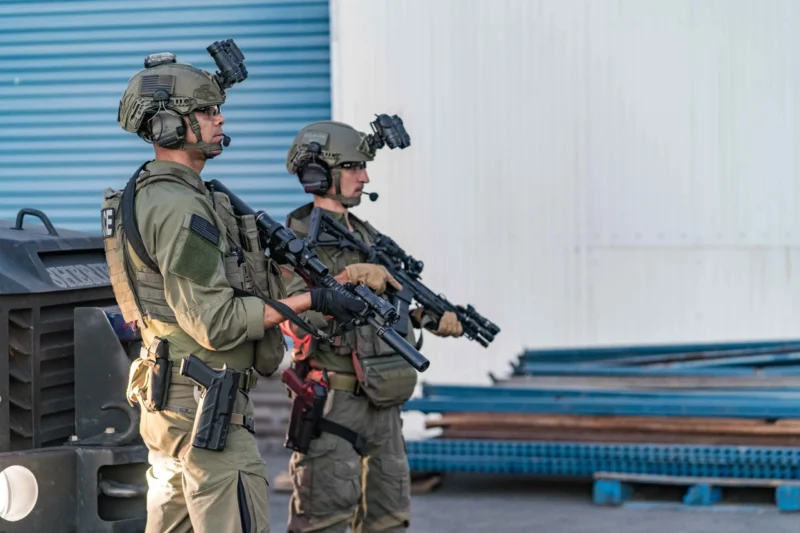
Bump helmets and ballistic helmets look nearly identical in photos, and both are widely used in tactical, law enforcement, and military environments. However, the protection they provide could not be more different. Choosing the wrong one for your mission means either carrying unnecessary weight or, more critically, having no protection against the threat you actually face.
This guide breaks down exactly what separates a bump helmet from a ballistic helmet, how each is constructed and tested, what accessories work with each, and how to make the right choice for your role and operational environment.
What Is a Bump Helmet?
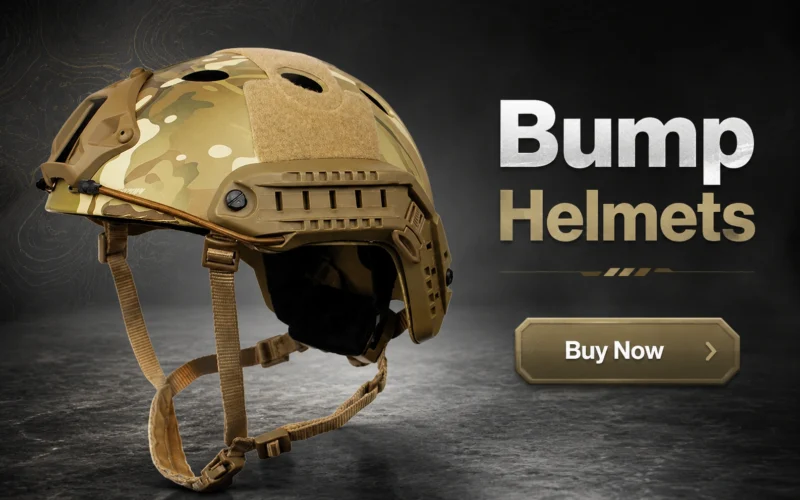
A bump helmet is a non-ballistic protective helmet designed to shield the wearer from blunt force impacts, abrasions, and environmental hazards. The name comes from its primary purpose: protecting against bumps, falls, and collisions during operations where ballistic threats are absent or not the primary concern.
Bump helmets are typically constructed from high-density ABS plastic or carbon fiber composites. These materials are durable, lightweight, and cost-effective, but they do not provide any rated protection against bullets or fragmentation. They are tested to impact-resistance standards for non-ballistic applications.
Despite offering no ballistic protection, bump helmets are widely used because they support the same mounting systems as ballistic helmets. Night vision devices, cameras, communication equipment, and other tactical accessories can be attached to a bump helmet using standard rail systems and NVG mounts. This makes them valuable in training environments, fast-rope operations, vehicle operations, and other scenarios where the primary hazard is impact rather than ballistic threat.
Who Uses Bump Helmets?
Bump helmets are commonly used by military personnel during training exercises, by law enforcement during low-risk operations such as crowd control or vehicle entries, by search and rescue teams, and by civilians who need head protection with tactical accessory mounting capability during range sessions or force-on-force training.
What Is a Ballistic Helmet?
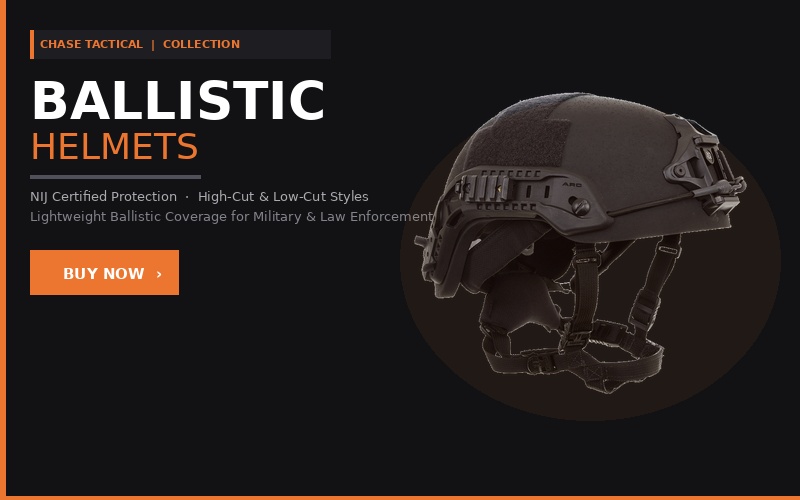
A ballistic helmet is engineered specifically to provide protection against bullets, fragmentation, and blast overpressure. Unlike a bump helmet, a ballistic helmet is constructed from advanced ballistic materials, including para-aramid fibers, ultra-high-molecular-weight polyethylene (UHMWPE), or a combination of both. These materials absorb and dissipate the energy of a projectile impact, preventing penetration and reducing the force transferred to the skull.
Ballistic helmets are rated through independent testing, with most modern tactical helmets achieving a rating equivalent to NIJ Level IIIA for handgun and fragmentation protection. The National Institute of Justice maintains standards and compliance testing for ballistic helmets to ensure consistent, documented performance across manufacturers.
Chase Tactical’s ballistic helmets are designed for military operators and law enforcement tactical units. They feature adjustable suspension and retention systems, padded interiors for extended wear, and full compatibility with night-vision mounts, communication systems, and other tactical accessories, delivering protection and functionality in a single platform.
Who Uses Ballistic Helmets?
Ballistic helmets are the standard for military combat operations, law enforcement SWAT and tactical teams, corrections officers in high-risk environments, and security contractors operating in areas where ballistic threats are realistic. Anyone who may be exposed to gunfire, fragmentation, or blast effects should be wearing a ballistic helmet rather than a bump helmet.
Bump Helmet vs Ballistic Helmet: Head-to-Head Comparison
| Factor | Bump Helmet | Ballistic Helmet |
| Ballistic protection | None | Yes, NIJ Level IIIA equivalent |
| Impact protection | Yes, blunt force and abrasion | Yes, blunt force and ballistic |
| Primary material | ABS plastic or carbon fiber | Para-aramid fiber or UHMWPE |
| Weight (typical) | 0.9 to 1.8 lbs | 2.5 to 4.0 lbs |
| NVG and accessory mounts | Yes | Yes |
| NIJ ballistic rating | None | Level IIIA equivalent |
| Cost range | Lower | Higher |
| Best use case | Training, low-threat operations, range use | Combat, tactical law enforcement, high-threat ops |
Accessory Compatibility: Are They the Same?
One of the most important practical considerations when choosing between bump and ballistic helmets is accessory compatibility. Both helmet types typically feature the same standard mounting systems, including Picatinny-style side rails, top rails, and front NVG shrouds. This means that most night vision devices, cameras, lights, and communication systems that attach to a ballistic helmet will also attach to a bump helmet using the same hardware.
This compatibility is one reason operators sometimes train with a lighter bump helmet while deploying with a ballistic helmet. The accessory setup transfers directly, so muscle memory and familiarity built during training carry over to operational use. Chase Tactical’s helmet accessories are designed to be compatible with both helmet types, allowing you to build a consistent accessory system regardless of which platform you use.
Weight and Fatigue: A Real Operational Factor
The weight difference between bump and ballistic helmets is significant over long operations. A bump helmet typically weighs between 0.9 and 1.8 pounds. A ballistic helmet of comparable form factor usually weighs between 2.5 and 4.0 pounds. Over a 10-hour shift or a multi-day operation, that weight difference accumulates into meaningful neck strain and fatigue.
For this reason, some operators choose bump helmets for extended training sessions, vehicle operations, or low-threat surveillance roles where a ballistic helmet would be unnecessary weight. The correct approach is to match the helmet to the threat level of the specific operation, rather than defaulting to the lighter option in all situations.
Helmet Standards: How Each Is Tested
Bump helmets are tested under non-ballistic impact standards depending on their intended use. Standards such as ASTM International testing protocols evaluate impact absorption and penetration resistance from blunt objects, but they make no claim about ballistic performance.
Ballistic helmets are tested under NIJ ballistic standards, which subject the helmet to actual projectile impacts at specified velocities. A helmet that meets NIJ Level IIIA equivalent standards has been tested to stop 9mm FMJ and .44 Magnum rounds. Always confirm the specific standard tested before purchasing a ballistic helmet to ensure it was tested against the threats relevant to your environment.
Which Helmet Should You Choose?
The decision comes down to one question: is a ballistic threat a realistic possibility in your operational environment? If the answer is yes, you need a ballistic helmet. No amount of weight savings justifies the absence of ballistic protection when gunfire or fragmentation is possible.
If the answer is no, meaning you are training, conducting low-risk operations, or using head protection primarily for impact and accessory mounting purposes, a bump helmet is a practical, cost-effective option that delivers the functionality you need without unnecessary weight.
Many operators choose to own both: a bump helmet for training and low-threat work, and a ballistic helmet for operational deployments. This approach lets you build and maintain familiarity with a consistent accessory setup while ensuring the right level of protection is available when the mission demands it.
Conclusion
Bump helmets and ballistic helmets share a similar profile and compatibility with the same accessories, but they serve fundamentally different purposes. A bump helmet protects against impact in non-ballistic environments. A ballistic helmet protects against both impact and projectile threats in any environment where gunfire or fragmentation is possible. Match your helmet to your threat environment, verify the certification, and never substitute a bump helmet for ballistic protection simply to save weight.
Frequently Asked Questions
Can a bump helmet stop a bullet?
No. A bump helmet provides no ballistic protection. It is designed to protect only against blunt-force impacts and environmental hazards. If there is any risk of ballistic threats, a certified ballistic helmet is required.
Are ballistic helmets rated to stop rifle rounds?
Most ballistic helmets are rated to an equivalent of NIJ Level IIIA, which covers handgun rounds and fragmentation. Rifle-rated helmets do exist but are rare due to the engineering challenges involved, particularly backface deformation at rifle velocities. For rifle-level head protection, additional attachments or specialized platforms are used.
Do bump helmets and ballistic helmets use the same NVG mounts?
In most cases, yes. Both helmet types use standard NVG shrouds and rail systems, so the same night vision devices and accessories can typically be mounted on either helmet. Verify compatibility with your specific helmet model before purchasing accessories.
How do I know if a ballistic helmet is NIJ certified?
Request the test documentation from the manufacturer or verify the helmet’s listing on the NIJ Compliant Products List. A genuinely certified ballistic helmet will have documented third-party test results confirming its rated level of protection.
Is a heavier ballistic helmet always more protective?
Not necessarily. The ballistic performance of a helmet depends on its construction and materials, not just its weight. Modern UHMWPE helmets can achieve Level IIIA equivalent protection at significantly lower weights than older aramid-fiber designs. Compare tested protection levels rather than relying on weight as a proxy for performance.