







Venezuela President Maduro Arrives in New York

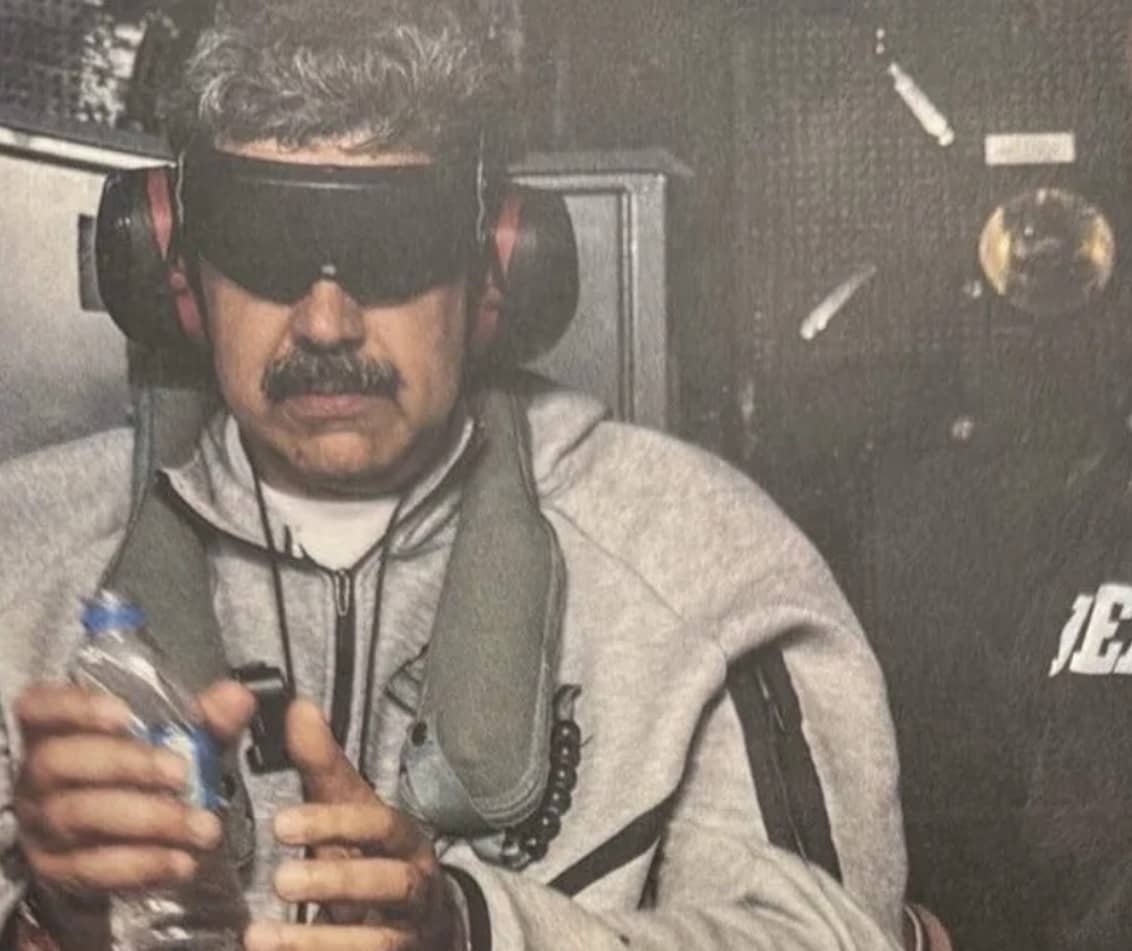
Former Venezuelan President Nicolás Maduro and his wife Cilia Flores arrived in New York on Saturday night, hours after US special operations forces extracted them from Caracas in an unprecedented military operation. The couple is being held at the Metropolitan Detention Center in Brooklyn and will appear in federal court Monday at noon to face charges related to drug trafficking and working with gangs designated as terrorist organizations.
Photos and video released Saturday show Maduro being walked through DEA headquarters, at one point telling agents “good night” and “Happy New Year.” In images circulating online, Maduro appears wearing a light blue hoodie made by Maine-based apparel company Origin.
Incredible footage of Maduro getting perp walked by DEA agents. pic.twitter.com/cl6dzBZuQt
— Townhall.com (@townhallcom) January 4, 2026
🚨 Imágenes de Nicolás Maduro tras su llegada a Nueva York y en cuarteles de la DEA, luego de su captura en Venezuela ⬇️ https://t.co/uyzw6uxQYw pic.twitter.com/HwcadEFgOU
— EL TIEMPO (@ELTIEMPO) January 4, 2026
Attorney General Pam Bondi said the indictment accuses Maduro of involvement in a scheme to import “thousands of tons” of cocaine into the United States. Six defendants are named, including Maduro’s wife, his son Nicolás Ernesto Maduro, Interior Minister Diosdado Cabello, former Interior Minister Ramón Rodríguez Chacín, and Tren de Aragua gang leader Hector Rusthenford Guerrero Flores.
“They will soon face the full wrath of American justice on American soil in American courts,” Bondi said.
President Trump shared the first image of Maduro in custody aboard the USS Iwo Jima on Saturday.
Nicolas Maduro on board the USS Iwo Jima. pic.twitter.com/omF2UpDJhA
— The White House (@WhiteHouse) January 3, 2026
Venezuela’s New Leadership
Venezuela’s Supreme Court moved quickly to fill the power vacuum, ordering Vice President Delcy Rodriguez to serve as acting president for 90 days. Defense Minister Vladimir Padrino Lopez endorsed the ruling. Rodriguez has served as vice president since 2018, overseeing the country’s oil-dependent economy and its intelligence service.
In her first televised address since Maduro’s capture, Rodriguez demanded his return and accused Washington of pursuing regime change to seize Venezuelan resources.
“We had already warned that an aggression was underway under false excuses, under false pretexts, and that the masks had fallen and it had only one objective: regime change in Venezuela — and the capture of our energy, mineral, and natural resources,” Rodriguez said.
Trump issued a blunt warning to Rodriguez in an interview with The Atlantic on Sunday.
“If she doesn’t do what’s right, she is going to pay a very big price, probably bigger than Maduro,” Trump said.
At a Saturday press conference at Mar-a-Lago, Trump appeared alongside Secretary of State Marco Rubio, Defense Secretary Pete Hegseth and Chairman of the Joint Chiefs Gen. Dan Caine. He announced the US would temporarily govern Venezuela.
“We’re going to run the country until such time as we can do a safe, proper and judicious transition” to a new government, Trump said.
He offered few specifics on how American oversight would work, saying officials would be named to manage the process. Trump said he wanted to prevent someone from taking power who would replicate Maduro’s rule.
“We can’t take a chance that somebody else takes over Venezuela that doesn’t have the good of the Venezuelan people in mind,” he said.
Trump also warned of additional military action if necessary. “We are ready to stage a second and much larger attack if we need to do so.”
Rubio later dismissed Rodriguez’s televised statement during Sunday news show appearances, suggesting her words were calculated for domestic consumption rather than genuine defiance.
“We’re not going to judge moving forward based simply on what’s said in press conferences. We want to see action here at the end of the day,” Rubio told ABC’s “This Week.”
Rubio also outlined the administration’s goals for Venezuela’s future government. “What we want is a future Venezuelan government that will be pro-American, that will contribute to stability, order and prosperity, not only in Venezuela, but in our own backyard,” he said.
Operation Absolute Resolve
Joint Chiefs Gen. Dan Caine walked reporters through the timeline and scope of the mission Saturday, describing months of preparation that culminated in a complex multi-domain operation.
Dan Caine outlined the rapid timeline of U.S. strikes and the capture of Nicolás Maduro, saying the operation lasted only a few hours.
— Open Source Intel (@Osint613) January 3, 2026
“Maduro and his wife GAVE UP and were taken into custody.”
“As we approached Caracas, their air defense systems were INSTANTLY PUMMELED.”
“We… pic.twitter.com/NEPhhsqM8F
Trump reportedly authorized the mission at 10:46 p.m. ET Friday, telling the force “Good luck and Godspeed.” American forces reached Maduro’s compound at 1:01 a.m. ET Saturday. Less than two and a half hours later, at 3:29 a.m., they were over international waters with Maduro and Flores secured. The captured president was taken to the USS Iwo Jima before being flown to New York.
The ground force that seized Maduro consisted of operators from the Army’s 1st Special Forces Operational Detachment-Delta, the unit commonly called Delta Force, working alongside FBI Hostage Rescue Team agents.
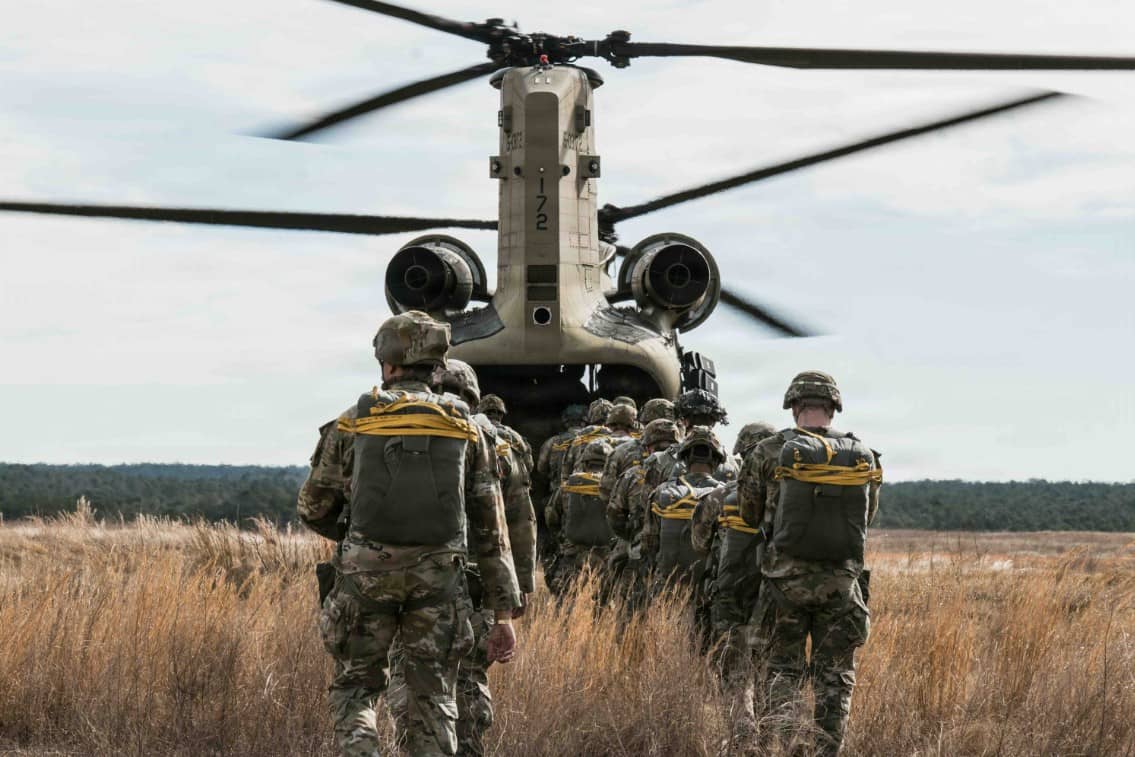
Aviation support came from the 160th Special Operations Aviation Regiment, the Army’s premier special operations helicopter unit known as the “Night Stalkers.” The regiment flew MH-47G Chinook and MH-60M Black Hawk helicopters on a low-altitude route over the Caribbean Sea into Venezuelan airspace.
NOW - Suspected U.S. Apache and CH-47 aircraft fly over Caracas, Venezuela. pic.twitter.com/FqDOJBYmRX
— Disclose.tv (@disclosetv) January 3, 2026
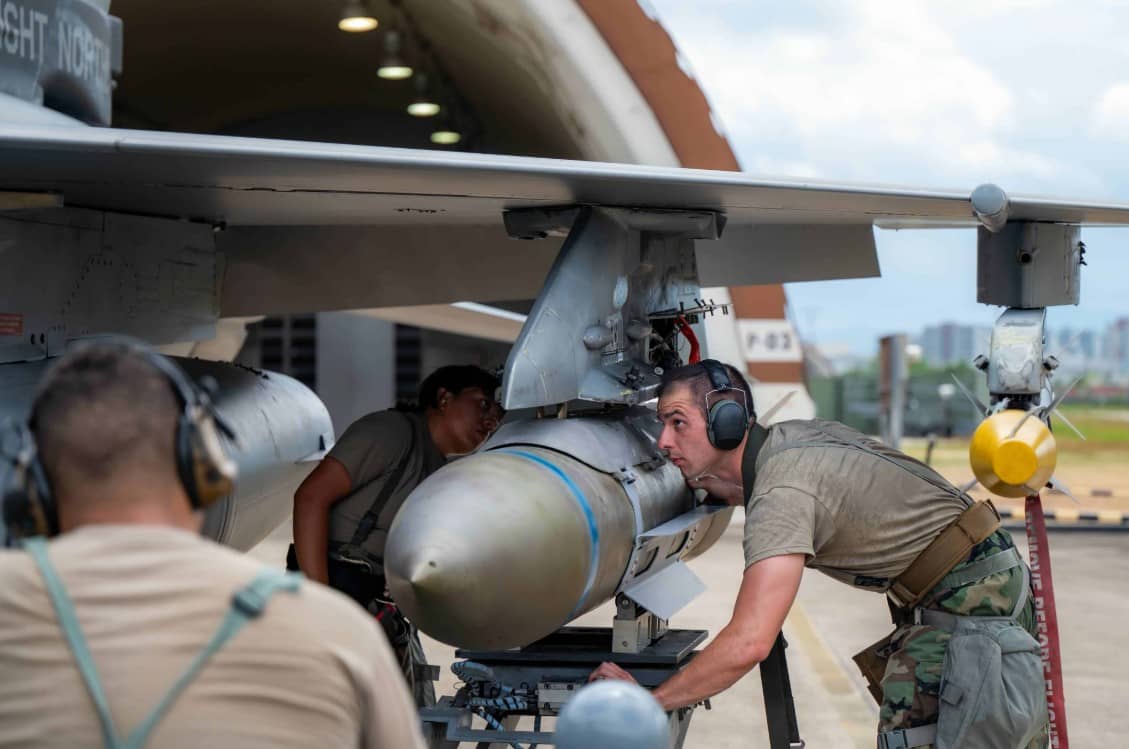
Caine said the operation required precise coordination across more than 150 aircraft launching from 20 locations on land and at sea. Every military branch participated: Army, Navy, Air Force, Marines, Space Force and intelligence agencies.
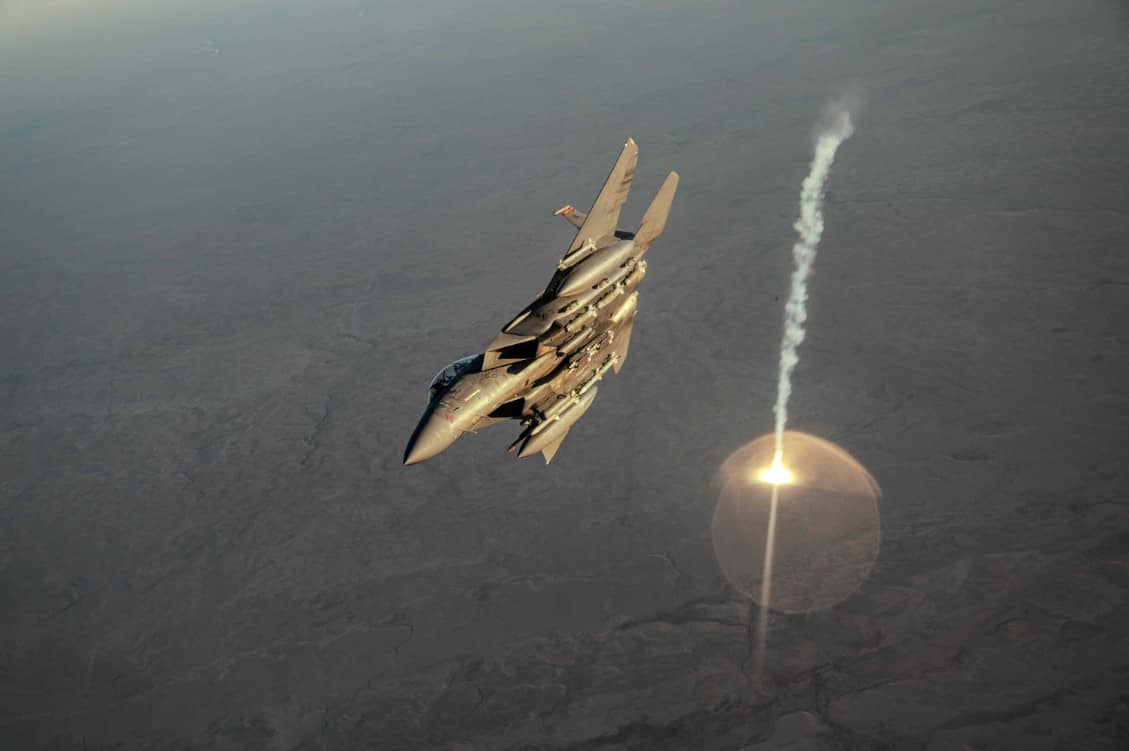
Aircraft confirmed to have participated include:
- F-35 Lightning II
- F-22 Raptor
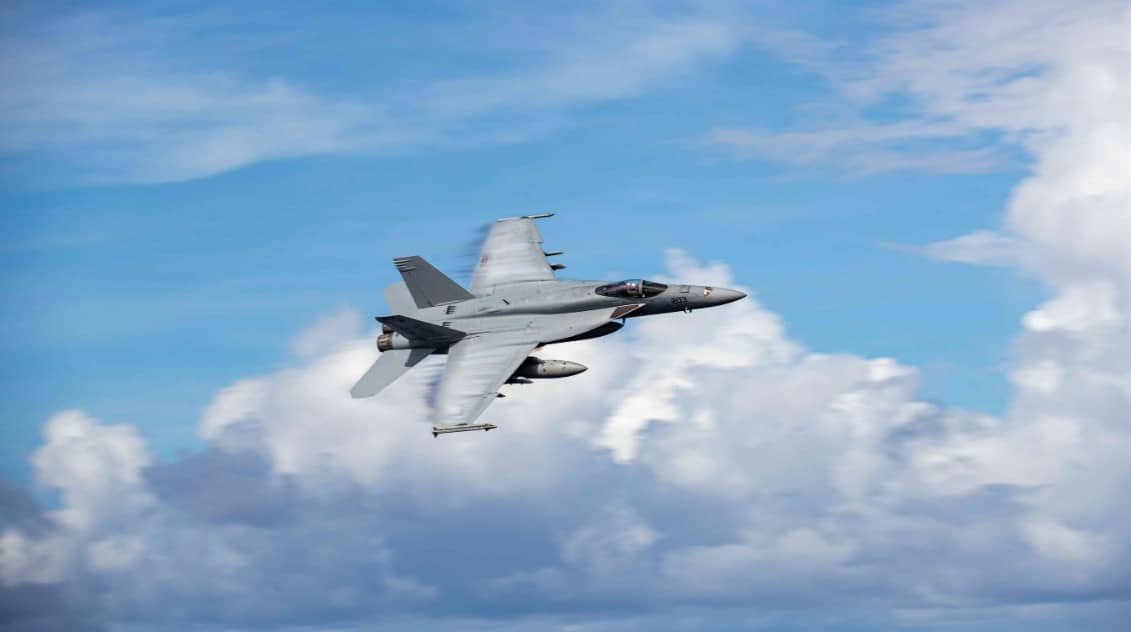
- F/A-18 Super Hornet
- EA-18 Growler
- B-1 Lancer bombers
- E-2 Hawkeye
- MH-47G Chinook
- MH-60M Black Hawk
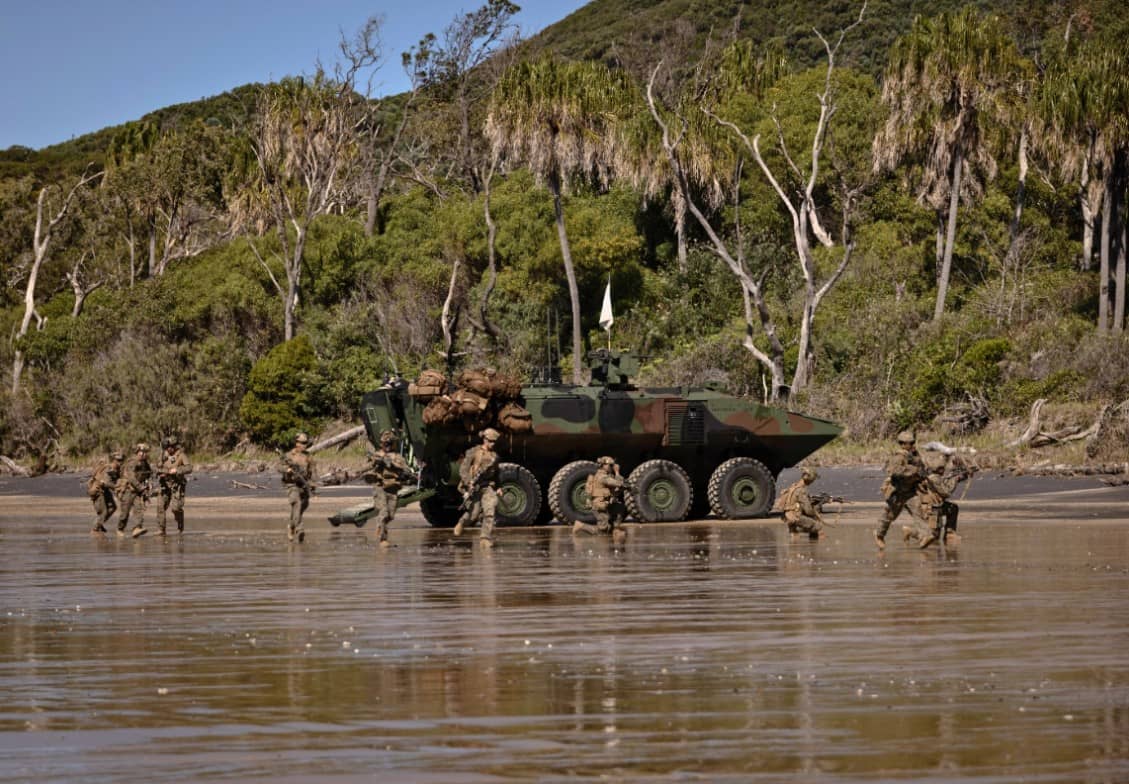
- Elements of the 22nd Marine Expeditionary Unit are also believed to have supported the operation.
Additionally, at least one RQ-170 Sentinel stealth drone was spotted returning to Roosevelt Roads Naval Station in Puerto Rico after the operation, marking the first publicly documented footage of the classified platform in operational service.
VERY RARE: Footage shows a U.S. RQ-170 stealth drone returning to Puerto Rico after reportedly supporting last night’s U.S. strikes on Venezuela.
— Clash Report (@clashreport) January 3, 2026
The RQ-170 Sentinel is a stealthy, high-altitude unmanned aerial vehicle developed by Lockheed Martin's Skunk Works. pic.twitter.com/R2qQI3TyvK
Notably, Caine also said US Cyber Command, Space Command and other combatant commands “began layering different effects” to “create a pathway” for the assault force ahead of kinetic strikes. Trump also implied that the city was blacked out during the operation.
“It was dark, the lights of Caracas were largely turned off due to a certain expertise that we have, it was dark, and it was deadly,” Trump said.
Footage from a vantage point over the city, showing multiple explosions across the Venezuelan capital of Caracas. pic.twitter.com/yzymxK6kib
— OSINTdefender (@sentdefender) January 3, 2026
Kinetic strikes then hit Venezuelan military targets to eliminate threats to the incoming helicopters. Bombs fell on Generalísimo Francisco de Miranda Air Base in La Carlota, Air Force installation at Barquisimeto, Catia La Mar barracks, Higuerote Airport and power infrastructure.
More footage of the strike on Generalissimo Francisco de Miranda Air Base. https://t.co/DT4SbgPeF5 pic.twitter.com/FyNMoVPPve
— SA Defensa (@SA_Defensa) January 3, 2026
The Venezuelan naval academy and marine base in Catia La Mar was also struck by the US this morning.
— CNW (@ConflictsW) January 3, 2026
A Venezuelan BUK unit was based there #Venezuela pic.twitter.com/8zB9kf05T2
Major secondary explosions after a U.S. airstrike in the vicinity of Higuerote Airport in Venezuela tonight. pic.twitter.com/NrFOVj9IfM
— OSINTtechnical (@Osinttechnical) January 3, 2026
The Fuerte Tiuna military complex, which houses the Venezuelan Army’s primary command center, was also decisively struck.
Photos which began circulating online after the operation show at least one, possibly two Buk systems destroyed.
Russia’s “Buk” failed and fell in an unequal fight: footage of damaged equipment in Venezuela after the U.S. strikes
— NEXTA (@nexta_tv) January 3, 2026
According to available information, Venezuela had 12 Russian-made 9K317E Buk-M2E air defense systems in service — the contract dates back to 2015.
🔻 During the… pic.twitter.com/C3C3H8kCtv
Observers and analysts noted the apparent lack of air defense response over the Venezuelan capital during the operation. However, footage emerged Sunday night showing at least one surface-to-air missile launch from a 9K38 Igla man-portable air defense system near Fuerte Tiuna in southern Caracas.
Trump confirmed one helicopter sustained damage during the raid, though it remained operational. ““One helicopter was hit pretty hard, but we got it back. ” he said. It remains unclear whether the damage resulted from the surface-to-air missile or small arms fire which was reported.
Footage which appears to show the launch of a surface-to-air missile from an 9K38 “Igla” Man-Portable Air-Defense System (MANPADS) against a U.S. military helicopter, during last night’s arrest and strike operation in the Venezuelan capital of Caracas. pic.twitter.com/qyvH8tRtuP
— OSINTdefender (@sentdefender) January 3, 2026
Caine said US helicopters came under fire and responded with force. Additional video shows gunfire erupting near residential towers inside the Fuerte Tiuna complex before MH-60M Black Hawks armed with rockets struck the source. The 160th operates specially configured Black Hawks known as Direct Action Penetrators equipped with rockets and guns for close air support.
BREAKING:
— Visegrád 24 (@visegrad24) January 3, 2026
U.S. helicopters are POUNDING the Venezuelan military complex Fuerte Tiuna in Caracas pic.twitter.com/l9jblj2O5a
WATCH: A Caracas resident captured video of U.S. helicopters during the raid to capture Nicolás Maduro at Fuerte Tiuna, with flares visible in the night sky. pic.twitter.com/J6mpo0oBgH
— Faytuks Network (@FaytuksNetwork) January 4, 2026
Asked if killing Maduro had been considered, Trump said “it could have happened.”
American intelligence officers had reportedly been tracking Maduro for months before the raid. Reporting indicates a small CIA team operated clandestinely inside Venezuela starting in August, gathering information on Maduro’s daily routines and movements that proved critical to the operation’s success.
Trump also proudly announced no Americans died in the mission.
“Not a single service member was killed and not a single piece of military equipment was lost,” Trump said. White House officials later confirmed multiple US personnel suffered wounds from bullets and shrapnel, but that all injuries are non-life-threatening, with the wounded reported in stable condition.
Venezuelan casualties were far higher. A senior Venezuelan official told the New York Times that 80 people died, a figure that includes both military personnel and civilians. Defense Minister Padrino also stated that American forces killed members of Maduro’s security team.
“Cold-bloodedly murdering a large part of [Maduro’s] security team, soldiers, and innocent citizens,” Padrino said.
Speaking to reporters at Mar-a-Lago, Rubio said many of Maduro’s bodyguards were Cuban nationals. He described Cuban penetration of Venezuelan security services as extensive.
“One of the biggest problems Venezuelans have is they have to declare independence from Cuba,” Rubio said. Venezuela’s intelligence agency was “basically full of Cubans,” he added.
At least one civilian death resulted from infrastructure damage rather than direct strikes. Reuters reported a transmission tower hit during the operation collapsed onto a home in El Hatillo on Caracas’ southeastern edge, killing one resident and injuring another.
Oil, Global Reaction and Greenland
Trump made clear that American companies would develop Venezuela’s petroleum resources.
“We are going to have our very large US oil companies go in, spend billions of dollars, fix the broken oil infrastructure and start making money,” Trump said. The US would “sell large amounts of oil” extracted from Venezuela, he added, including sales to China.
Venezuela possesses more proven oil reserves than any nation on earth, with 303 billion barrels — exceeding even Saudi Arabia. The country’s petroleum is predominantly heavy crude, a variety that requires specialized refining capacity. American refineries along the Gulf Coast in Texas and Louisiana are among the few facilities worldwide equipped to process heavy crude at scale.
Capital Markets publication The Kobeissi Letter noted that gaining access to Venezuelan heavy crude would reduce American reliance on other suppliers while weakening Russia, which holds large heavy crude reserves. Control of Venezuelan oil would also give Washington leverage over Beijing, since China currently purchases about 5% of its annual oil imports from Venezuela.
While economists dove into the markets, Venezuelans who fled Maduro’s rule celebrated in cities across the globe Saturday. Crowds gathered in Miami, Doral and Palm Beach in Florida, as well as in Chile, Peru, Ecuador, Colombia and Spain, according to NBC News. Many wore Venezuelan national colors and waved flags while chanting “Liberty!”
In Doral, a Miami suburb with such a large Venezuelan population that locals call it “Doralzuela,” people rushed into the streets overnight when news broke, some still wearing pajamas.
“Thank you, Lord, thank you president of the United States. I’ve been waiting for years,” Yajaira, a Venezuelan American originally from Maracaibo, told NBC News. She described losing her brother to violence and having other family members kidnapped under Maduro. “They killed my older brother. It was so tough. They kidnapped my brothers.”
Roughly 8 million Venezuelans have left the country during Maduro’s rule as the economy collapsed and an estimated 80% of the population fell into poverty.
European governments and officials offered mixed reactions, welcoming Maduro’s removal while expressing disagreement with how it occurred.
French Foreign Minister Jean-Noël Barrot offered the sharpest criticism, saying the operation “violates the principle of non-use of force that underpins international law.”
EU foreign policy chief Kaja Kallas urged restraint, saying “the principles of international law and the UN charter must be respected.”
The operation also rekindled concerns about Trump’s designs on Greenland. Hours after Maduro’s capture, Katie Miller, wife of deputy White House chief of staff Stephen Miller, posted an image on X showing Greenland colored with the American flag. Her caption was a single word: “SOON.”
SOON pic.twitter.com/XU6VmZxph3
— Katie Miller (@KatieMiller) January 3, 2026
Danish officials quickly reacted. Ambassador to the US Jesper Moeller Soerensen responded that Denmark expects “full respect for the territorial integrity” of the Danish kingdom.
Prime Minister Mette Frederiksen issued a statement Sunday calling on Trump to “stop the threats.”
“The U.S. has no right to annex any of the three nations in the Danish kingdom,” Frederiksen said. “I would therefore strongly urge the U.S. stop the threats against a historically close ally and against another people, who have very clearly said that they are not for sale.”
Greenland’s Prime Minister Jens-Frederik Nielsen called Miller’s post “disrespectful” but said it changes nothing.
Trump, in his Atlantic interview Sunday, reiterated his interest in the Danish territory.
“We do need Greenland, absolutely. We need it for defense,” he said.