








How to Maximize Your MOLLE Real Estate on Any Carrier

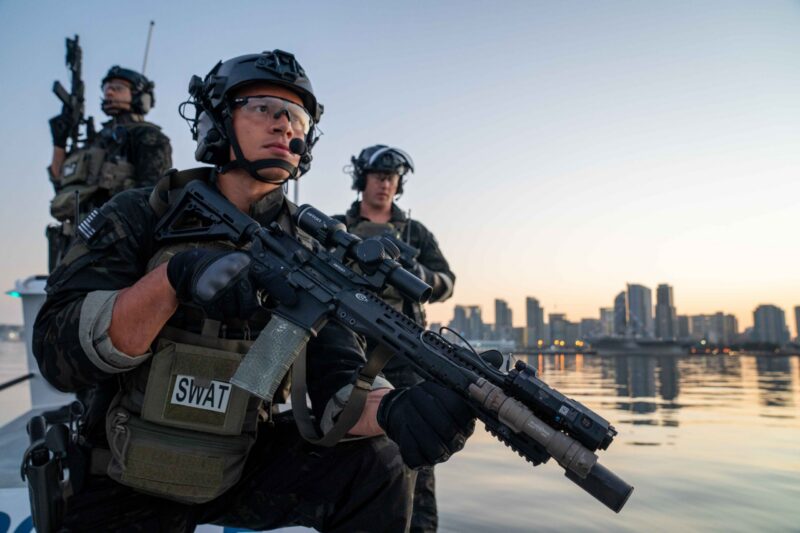
MOLLE Modular Lightweight Load-carrying Equipment is the attachment standard that makes modern plate carriers, chest rigs, and tactical vests genuinely configurable. But having MOLLE webbing and using it well are two different things.
A poorly organized carrier creates access conflicts, uneven weight distribution, and a loadout that works against you during fast movement or high-stress situations. A well-organized carrier puts the right gear in the right place, keeps the weight balanced, and gives you instinctive access to everything you need without searching. This guide walks through every layer of MOLLE optimization, from initial layout planning to attachment technique to surface-by-surface configuration, so you can build a setup that performs as well as the gear on it.

Planning Your Gear Layout Before You Attach Anything
The most common MOLLE mistake is attaching gear without a plan. Operators thread a pouch onto the front panel, add another beside it, and keep going until the carrier is full, then wonder why accessing a specific item requires awkward hand movements or force them to clear other pouches first. Start with a layout plan before anything touches the webbing.
Map your gear by three criteria: how often you use it, how fast you need it, and how much space it takes. Frequently accessed items, primary magazines, medical supplies, and communication gear need to be positioned within reach without requiring you to shift your body or adjust your grip on your primary weapon. Items accessed less often can occupy less prime real estate, further from the centerline or lower on the carrier.
Layout Planning Checklist
- List every item you plan to carry and its approximate pouch dimensions
- Rank items by access priority. What do you reach for first under stress?
- Identify your dominant hand and plan primary access points accordingly
- Estimate the combined weight and identify where it will concentrate
- Visualize the full configuration before threading a single strap adjust on paper first
For a mission-by-mission breakdown of how different environments change pouch priority and placement, see our plate carrier setups for different environments guide.
Securing Attachments Correctly
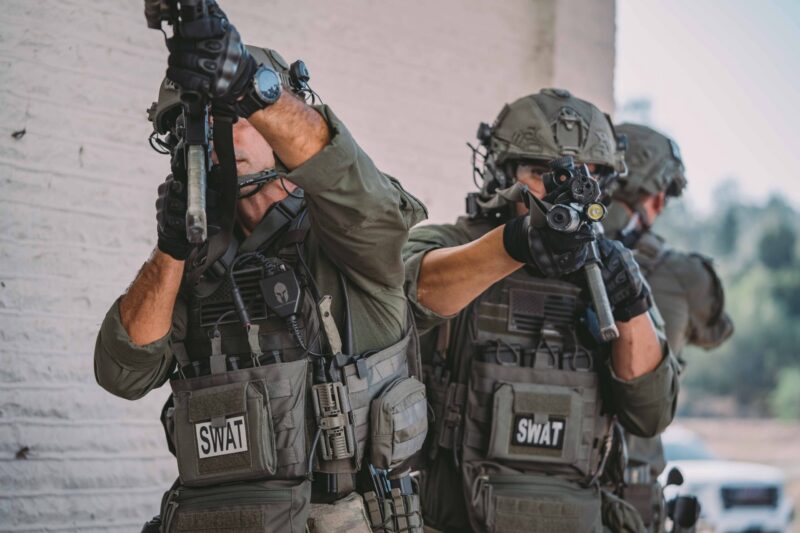
MOLLE attachment is only as secure as the threading technique used. The most common failure point is skipping webbing rows during attachment operators’ thread through every other row to save time, which creates gaps where the pouch can pivot or shift under load. Correct MOLLE attachment threads through every row of PALS webbing on both the carrier and the pouch, alternating between the two surfaces to create an interlocked weave.
Correct Threading Technique
- Start at the bottom row and work upward, threading through every row without skipping
- Alternate the strap path between the carrier’s webbing and the pouch’s webbing on each pass
- Tighten progressively as you move up do not cinch tight at the bottom before finishing
- Snap or close the retention clip only after all rows have been threaded
- Perform a firm tug test in all directions before loading the pouch with gear
A properly threaded MOLLE attachment should not shift, pivot, or pull away from the carrier surface under sustained force. If the pouch moves, re-thread. Velcro-backed panels and quick-release buckles are useful for pouches that need to be swapped between missions, but they do not replace proper MOLLE threading for load-bearing pouches that must stay fixed under dynamic movement. For a full overview of how MOLLE compatibility works across different carrier platforms, see our guide to MOLLE-compatible plate carriers.
Using Every Available Surface Strategically
A plate carrier has more usable real estate than most operators exploit. Each surface serves a different function, and understanding those functions prevents overcrowding on the front panel while leaving usable space elsewhere empty.
Front Panel
The front panel is your highest-priority real estate. This is where primary magazines, medical gear, and communication pouches belong, items you need fast and with one hand. Arrange magazine pouches from your support side toward the centerline for the most natural draw sequence. Keep the front panel to a single layer of pouches; stacked configurations push your profile outward and create snag points during movement through confined spaces.
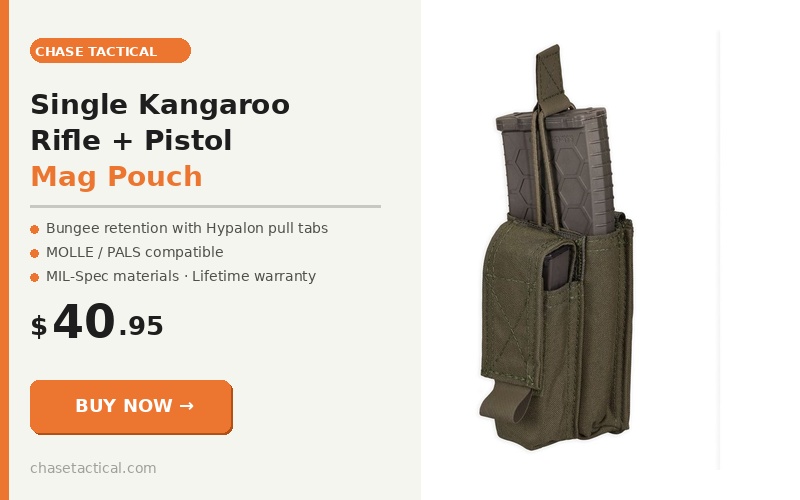
For operators running a hybrid caliber setup, a rifle magazine alongside shotgun or CS marker rounds a combined pouch like the Chase Tactical Single Kangaroo Rifle + Pistol Mag Pouch keeps both calibers in a single MOLLE slot. It holds one 30-round 5.56mm rifle magazine via bungee retention with Hypalon pull tabs, plus a pistol magazine in a front hook-and-loop compartment with internal height adjustment, and is compatible with all MOLLE/PALS systems.
Cummerbund and Side Panels
The cummerbund’s exterior MOLLE rows are well-suited for admin pouches, utility pouches, radio pouches, and secondary ammunition. Items mounted here are accessible from the sides without interfering with access to the front panel. Keep the cummerbund loads balanced; uneven lateral weight affects how you pivot and transition between positions. If your cummerbund features internal soft-armor pockets, these should be filled before adding external pouches to maintain proper weight distribution against the body.
Rear Panel
The rear panel is best used for admin gear, backup supplies, or hydration. Items stored here are not accessible during an engagement, so reserve this space for sustainment gear, extra rations, a backup radio, or extended-mission supplies rather than anything you need quickly. Second-layer MOLLE systems on rear panels provide additional attachment points without adding bulk to the front or sides.
Shoulder Straps

Shoulder straps are limited in load-bearing capacity and should carry only lightweight items, such as tourniquets, small chemical lights, or communication antenna routing. Overloading shoulder straps shifts weight upward, increasing neck and shoulder fatigue during extended wear.
Weight Distribution and Ergonomics
How weight is distributed across your carrier is as important as what you carry. A front-heavy configuration creates forward lean, straining the lower back and limiting your ability to move efficiently. The goal is to keep the majority of loaded weight centered and close to your body’s natural center of gravity, roughly in line with your sternum and spine, with lateral weight balanced evenly across the left and right sides.
Heavier pouches, triple magazine pouches, radio pouches, and medical kits should sit as close to the body and as centered as possible. Lighter accessories can occupy peripheral positions without meaningfully affecting balance. Avoid stacking pouches vertically on the front panel to increase capacity; a deep, protruding front panel catches on obstacles, interferes with prone positions, and pushes the carrier’s weight forward off the body’s centerline.
According to NIJ guidelines on body armor and load-bearing systems, load distribution directly affects both operator endurance and ballistic plate positioning — a carrier that shifts under load reduces the coverage your plates are designed to provide. Keep this in mind when configuring heavy front-panel loads: the cummerbund fit and shoulder strap tension must be adjusted together whenever significant weight is added to the carrier.
Modularity and Mission-Specific Reconfiguration
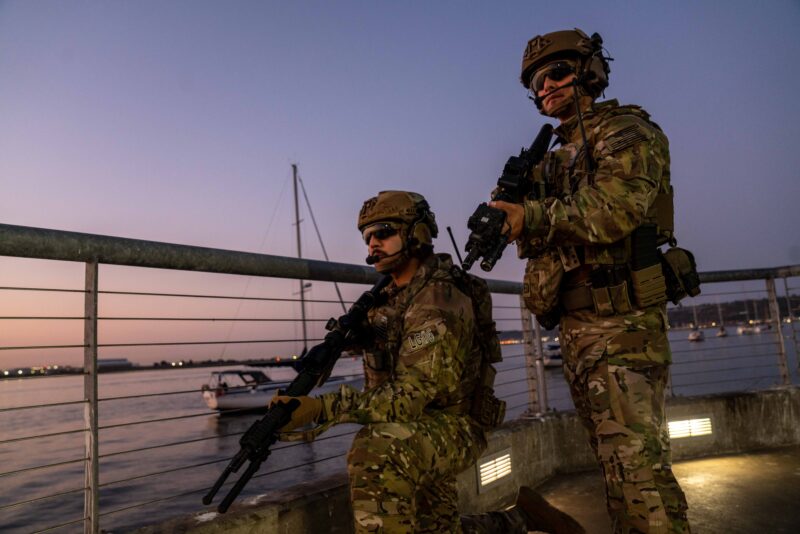
One of MOLLE’s core advantages is the ability to reconfigure your loadout between missions without replacing the carrier itself. Build your pouch selection around this principle: choose pouches that serve a clearly defined role, and keep a short list of mission-specific swaps that can replace standard loadout items when the threat environment or operational tempo changes.
Quick-release buckles and loop-backed attachment panels enable faster pouch swaps between missions. Fixed MOLLE threading is better for load-bearing pouches that stay consistent across all configurations. Separate these two categories in your kit know which pouches are permanent and which are variable, so reconfiguration is fast and systematic rather than a full rebuild each time. For a comprehensive look at pouch types and how to evaluate them for your role, see our guide to choosing the right mag and ammo pouch and our guide to choosing plate carrier accessories for missions.
Conclusion
Maximizing your MOLLE real estate is not about filling every available row; it is about using each surface intentionally so that the gear you need most is always exactly where your hands expect it. A well-configured carrier starts with a deliberate layout plan, uses proper threading techniques to ensure nothing shifts under load, distributes weight to keep the carrier stable and your body balanced, and separates mission-variable pouches from fixed loadout items so reconfiguration is fast and reliable.
The underlying principle is that your carrier should disappear during use, require no conscious attention to navigate, require no searching during reloads, and require no adjustments during movement. That level of functionality does not happen by accident. It is the result of deliberate configuration, tested under movement, and refined over time. Build your MOLLE layout with that standard in mind, and your carrier becomes a genuine force multiplier rather than just a place to hang gear.
Frequently Asked Questions
How do I clean and maintain MOLLE webbing?
Empty all pouches and remove attached gear before cleaning. Brush off loose dirt from the webbing rows, then spot-clean soiled areas with mild detergent and a soft brush. Rinse thoroughly and air dry completely before reattaching pouches. Moisture trapped under threaded straps accelerates fabric degradation. Avoid machine washing assembled carriers, and keep gear away from prolonged direct sunlight when stored, as UV exposure weakens nylon webbing over time.
What materials make for the most durable MOLLE webbing?
Type III nylon webbing is the standard for duty-grade MOLLE systems. It offers low stretch, high abrasion resistance, and reliable load-bearing capacity across a wide temperature range. High-denier Cordura fabrics 500D for most applications, 1000D for extreme-duty use, provide the panel backing that holds the webbing under sustained load. Reinforced stitching with high-tenacity bonded nylon thread at all stress points is the most reliable indicator of construction quality across any MOLLE system.
Are there weight limits for MOLLE attachments?
There is no universal weight limit it depends on the carrier’s construction, the denier rating of the panel fabric, and how the load is distributed across the webbing. What matters more than a single-point weight limit is how evenly the load is spread across multiple attachment rows. A pouch threading through four rows of correctly woven webbing distributes its load across the full panel width; a pouch skipping rows concentrates stress at fewer anchor points and fails sooner. Follow correct threading technique and stay within the carrier manufacturer’s recommended load ratings.
Can I use MOLLE pouches across different carrier platforms?
Yes. MOLLE/PALS is a standardized attachment system, and pouches built to that standard are compatible across all carriers using the same webbing configuration. Verify that the PALS row spacing on both the carrier and the pouch match standard spacing is 1.5 inches between rows, 1 inch wide per column, and that the pouch’s attachment straps are long enough to thread through the number of rows on the target carrier. Most quality tactical pouches, including the full Chase Tactical ammo pouch line, are designed to be universally MOLLE compatible.