






Night Vision Mounts and Helmet Accessories: What Operators Need to Know

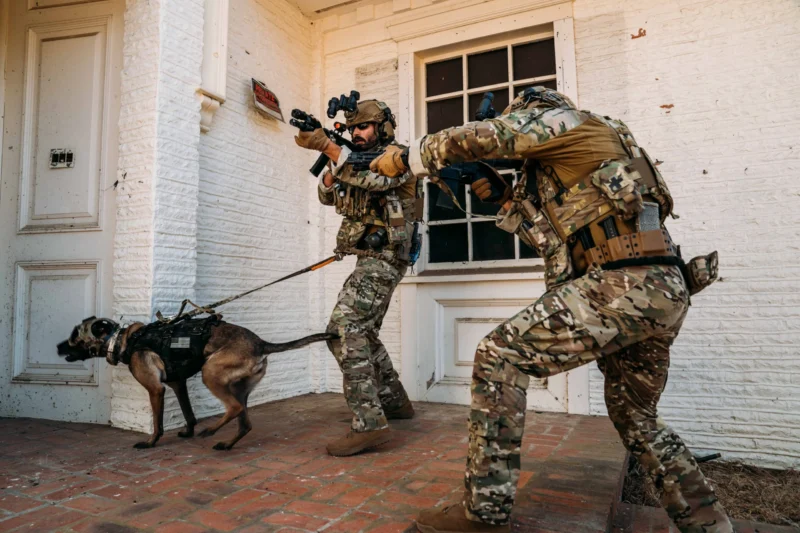
A ballistic helmet without rail systems is a protective shell. A ballistic helmet with a fully configured rail system is a mission platform. The distinction matters because the accessories mounted to that platform, night vision devices, cameras, lights, counterweights, and communication hardware, directly determine what an operator can do in a given environment and how effectively they can do it.
This guide covers the helmet accessory categories that matter for military and law enforcement operators, what to look for in each, and how to build a helmet configuration that supports the mission rather than complicating it.
The Foundation: Why Accessory Compatibility Starts With the Helmet
Before selecting any accessory, the helmet itself determines what is possible. Not all helmets accept the same mounting systems. Not all rail systems are compatible with all devices. Getting the foundation right before purchasing accessories prevents the expensive and operationally disruptive problem of accessory incompatibility in the field.
Chase Tactical’s ACH helmets are Level IIIA-rated ballistic helmets that include rail systems for accessory mounting. The ACH rail system is the standard platform around which the accessory ecosystem covered in this guide is built. If you are evaluating a different helmet, verify rail compatibility against each accessory category below before committing.
For operators who are still evaluating which helmet to build on – or who want to understand what Level IIIA protection means for their threat environment – our guide on Ballistic Helmet Ratings Explained: NIJ Standards and Levels covers the full NIJ standard breakdown and the distinction between ballistic and bump helmets.
Night Vision Device Mounts
Night vision devices (NVDs) are among the most operationally significant accessories a helmet can carry. Moving from unaided to NVD-equipped fundamentally changes an operator’s effectiveness in low-light environments.
What to Look For in an NVD Mount
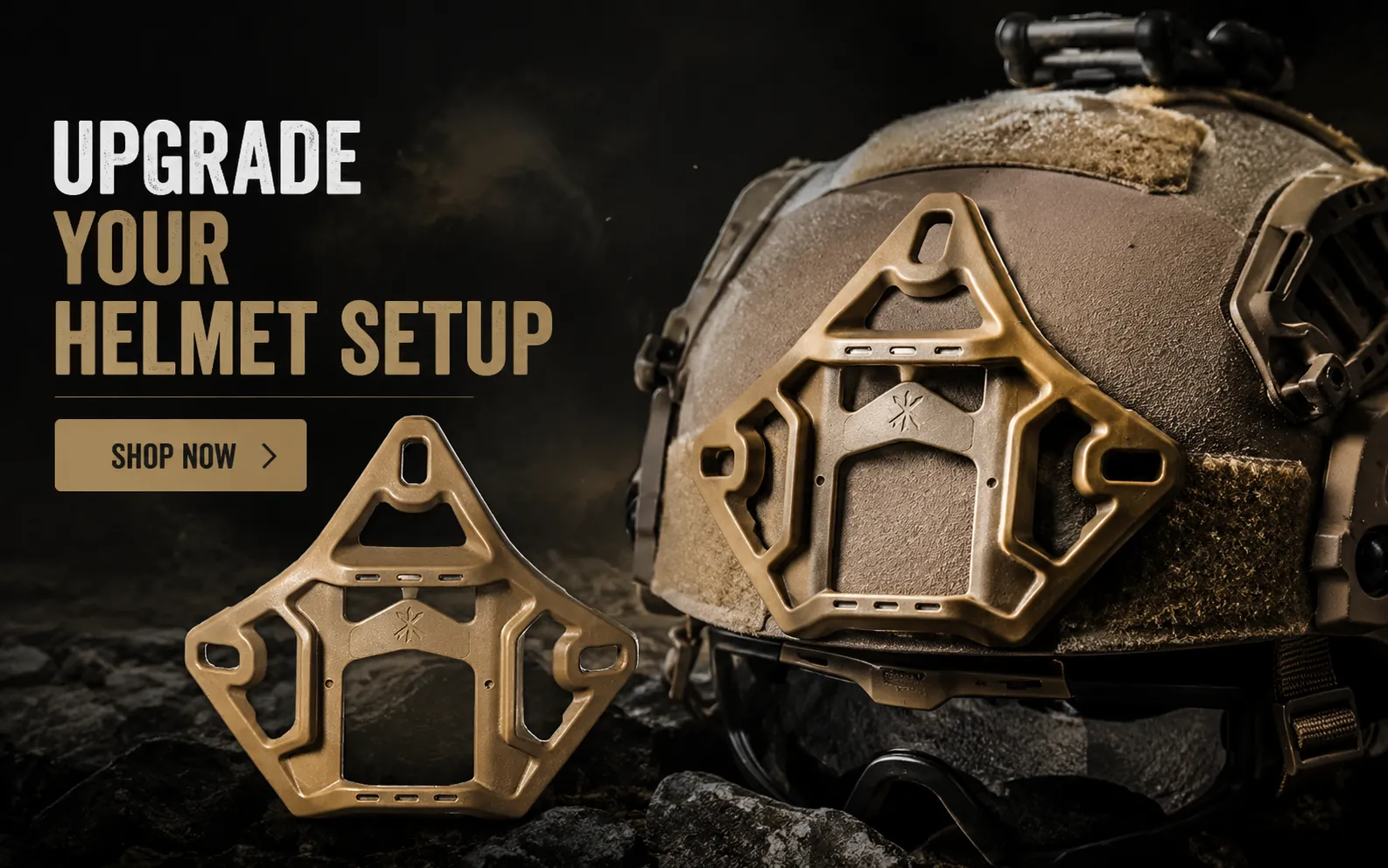
Compatibility with your NVD shroud: NVD mounts attach to the front of the helmet via a shroud that interfaces with the device’s dovetail or J-arm connector. The shroud must be compatible with the specific device being mounted. ACH helmets use standard shroud systems that accept the J-arm and dovetail connections used by most military-grade NVDs.
Breakaway capability: A mount that separates cleanly under high lateral force prevents the helmet from being ripped off the head if the NVD snags during movement. This is not a performance feature – it is a safety requirement.
Tilt adjustment range: The ability to tilt the NVD upward when not in use (flip-up position) and down to the eye without repositioning the head is a standard operational requirement. Mounts with a limited tilt range are operationally inferior regardless of their other characteristics.
Weight and balance: NVDs mounted at the front of the helmet shift the center of gravity forward. The heavier the device, the more pronounced the forward pull on the neck over extended wear. Mount weight compounds this effect.
Counterweight Systems
Any NVD mount configuration needs a counterweight system. An unbalanced helmet fatigues the neck, reduces visual field stability during movement, and places pressure on the retention system at the rear of the helmet as the strap compensates for the forward pull.
Counterweight pouches mount to the rear of the helmet on the rail system. They accept ballast weight and battery packs, serving double duty as both balance correction and accessory storage. The correct counterweight is the weight that brings the balanced center of gravity back to center at the vertical axis – not the heaviest weight available.
Helmet Lights
Helmet-mounted lights serve both hands-free illumination and marker functions. Two categories define helmet lighting:
White Light Illumination
White light mounts to the front or side rail and provides standard illumination for close environments, document reading, or non-tactical movement. The key specifications that matter operationally are:
- Lumen output: High lumen outputs are not always better in close quarters. A 1,000-lumen flood in a close-range indoor environment creates a reflective wash. Match lumen output to the operational context.
- Beam pattern: Flood beam for area illumination, spot beam for target identification. Many tactical lights offer selectable patterns.
- Activation method: Lights that require removing a hand from a weapon or tool to activate are operationally inferior to those with remote pressure switches or momentary activation at the light body.
IR and Marking Lights
Infrared illuminators, IR strobes, and friend-or-foe markers are used in conjunction with NVDs and are invisible to the unaided eye. For operators working in NVD-equipped teams, IR markers on helmets allow team members to identify one another without a visible-light signature.
Camera Mounts
Helmet-mounted cameras serve documentation, training review, and real-time transmission functions. What to look for when evaluating helmet camera mounts:
Rail interface stability: Camera mounts must hold zero under the vibration and impact of active operations. A mount that allows the camera to shift changes the documentation angle and increases the risk of the camera separating on impact.
Position options: Front-rail cameras capture the operator’s point of view. Side-rail cameras capture a broader environmental context. Some configurations use both. Position selection depends on the documentation or transmission requirement for the specific mission.
Weight distribution: Cameras add to the forward or lateral weight load on the helmet. Factor the camera weight into the overall balance calculation, along with NVD mounting, if both are used simultaneously.
Communication and Audio Systems
Helmet-integrated communication systems – hearing protection, bone conduction microphones, and headset mounts – complete the operational picture for fully configured helmets.
Headset Mounts and ARC Rail Adapters
Communication headsets designed for helmet integration use ARC rail adapters that attach to the helmet’s side rails. The ARC system is the standard interface for most military and law enforcement communication headsets. Chase Tactical’s ACH helmets feature side rail systems compatible with ARC-pattern adapters.
Key considerations for headset mounting:
- ARC rail position: The side rail height on the helmet determines the headset ear cup position relative to the wearer’s ear. Verify that the rail position allows correct ear alignment for the specific headset being mounted.
- Retention under movement: Headset mounts must hold the cups against the ears during rapid movement, low crawls, and vehicle entry and exit. A cup that shifts off the ear during movement defeats the hearing protection and communication function simultaneously.
Bone Conduction Microphones
In environments where ear cup communication systems are impractical, bone conduction microphones are mounted inside the helmet and transmit voice via vibration through the skull rather than through a traditional microphone element near the mouth. These systems allow communication at whisper volumes in high-noise environments.
Face Shields and Eye Protection
Riot response and breaching operations place the face in direct threat zones that the helmet shell does not cover. Face shields mount to the front rail of ACH helmets and provide ballistic or impact-rated protection for the face and eyes.
For law enforcement operators in riot-response roles, helmet-mounted face shields are a frontline protective requirement. For the full breakdown of how riot response gear integrates with helmet accessories, see our guide on Riot Gear for Law Enforcement: What Officers Need and Why.
Building a Balanced Configuration: Practical Priorities
The instinct when configuring a fully equipped helmet is to mount everything the rail system will accept. The correct approach is to mount only what the mission requires.
Every accessory adds weight, shifts the center of gravity, and creates a potential snag point. A configuration optimized for direct-action night operations looks different from one optimized for daytime patrols. Building for the actual mission profile – not the theoretical maximum – produces a helmet that performs better under the conditions it will actually encounter.
A practical configuration priority order:
- Retention system: Ensure proper fit and retention before adding any accessories. An accessory-loaded helmet on an incorrectly fitted shell is a liability.
- NVD mount and counterweight together: Never mount an NVD without simultaneously addressing counterweight balance.
- Communication system: If the mission requires communication, integrate it before adding documentation or lighting accessories.
- Lighting: Add only what the mission requires. One properly positioned light is more operationally effective than three poorly positioned ones.
- Documentation: Camera mounts are mission support, not primary equipment. Add last, after primary and safety systems are configured.
FAQs
Are Chase Tactical ACH helmets compatible with standard NVD mounts?
Chase Tactical’s ACH helmets include rail systems compatible with standard ACH/MICH-pattern mounting hardware, which accommodates the J-arm and dovetail NVD interfaces used by most military-grade night vision devices. Verify specific compatibility for the NVD and mount combination being used.
What is a counterweight pouch, and do I need one?
A counterweight pouch mounts to the rear rail of the helmet and holds ballast weight to offset the forward center-of-gravity shift caused by NVD mounting. Any operator using a front-mounted NVD needs a counterweight system. The forward pull without a counterweight causes neck fatigue, reduces visual stability during movement, and puts abnormal load on the retention system.
Can helmet accessories be transferred between helmets?
Rail-mounted accessories transfer between helmets that share the same rail system standard. ACH-pattern rail accessories are compatible across the ACH/MICH-family helmets. Verify rail compatibility before assuming accessories from one helmet transfer directly to another.
What is the ARC rail system?
ARC (Accessory Rail Connector) is the standardized side-rail system used on ACH-pattern helmets for attaching headsets and other side-mounted accessories. Most military and law enforcement communication headsets designed for helmet integration use ARC-pattern adapters. Chase Tactical’s ACH helmets feature ARC-compatible side rails.
How do I manage cable routing on a fully configured helmet?
Cable management – routing cables for NVD battery packs, remote pressure switches for lights, and communication headset connectors – is an integration consideration that affects both comfort and operational reliability. Cables should be routed along the interior of the helmet’s pad system where possible, secured with retention clips, and checked for interference with retention strap adjustments before field deployment.