








How to Set Up a Mixed Loadout on Your Plate Carrier

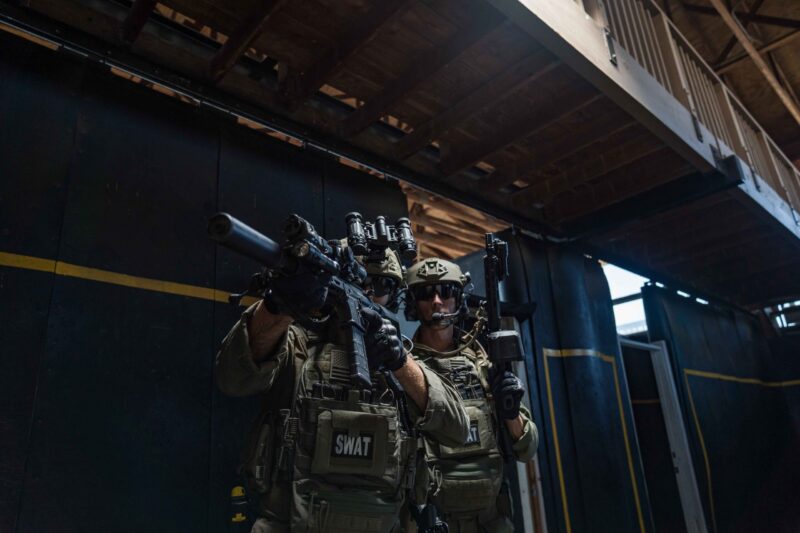
A mixed loadout, one that combines rifle magazines, pistol magazines, medical gear, communication equipment, and utility items on a single plate carrier, is the standard configuration for most real-world tactical applications. The challenge is not finding gear to fill the space; it is making deliberate decisions about what belongs on the carrier, where it sits, and how the weight distributes across your body. A poorly configured mixed loadout creates access conflicts, uneven load, and a carrier that works against your movement instead of with it. This guide walks through plate selection, fit adjustment, panel organization, medical kit integration, and weight distribution so you can build a setup that is both protective and operationally effective from the first time you put it on.
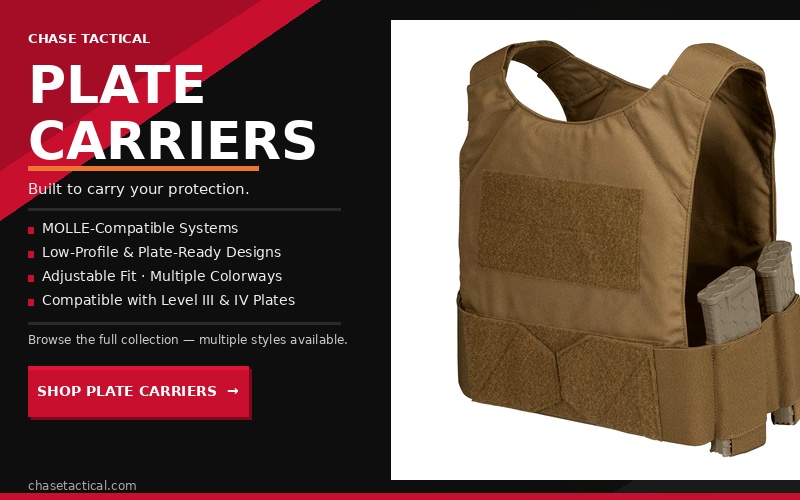
Plate Selection and Configuration
Your plate selection establishes the foundation of your entire loadout. Everything else carrier fit, pouch placement, and weight distribution, is built around the plates you choose. Start with a protection level matched to your actual threat environment. Level III rifle plates stop 7.62mm FMJ rounds and are the practical standard for law enforcement and general field use.
Level IV ceramic plates stop .30 caliber armor-piercing rounds and are required for higher-threat environments. For a full breakdown of protection levels and what each rating defends against, see our body armor protection levels guide.
Plate sizing affects both coverage and how the carrier fits against your body. Standard 10×12 plates suit most users, but proper sizing requires measuring from your collarbone to your navel and across your chest at the widest point. A plate that is too small leaves vital organs exposed; one that is too large restricts shoulder movement and shifts the carrier’s weight forward. Plate curvature also matters. Multi-curve plates conform to the natural contour of the torso, reducing pressure points and improving stability during sustained wear.
Plate Material Trade-offs
- Ceramic: Lightweight, NIJ-certified for Level III and IV, best all-around choice for field use standard across Chase Tactical’s rifle plate line
- UHMWPE (polyethylene): Lightest option, capable of multi-hit performance, higher cost
- Steel: Highly durable, lower cost, significantly heavier the weight trade-off affects fatigue over extended wear
Adjusting for a Proper Fit
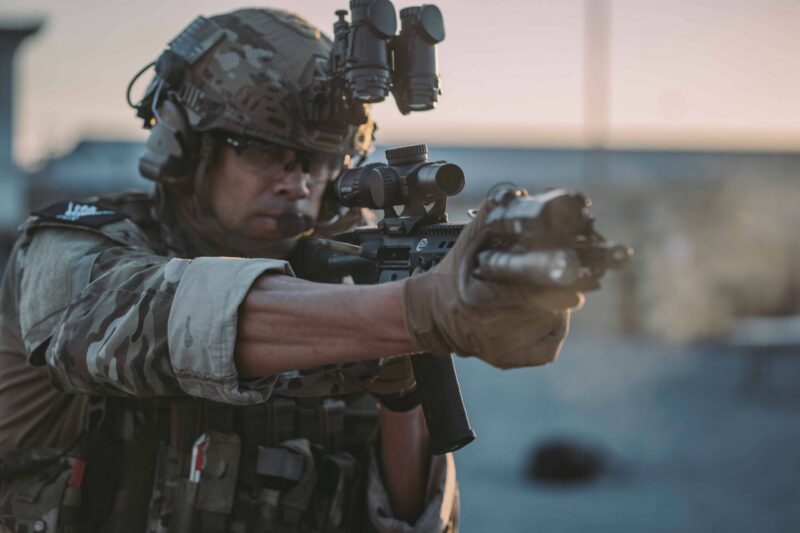
Plate carrier fit is not optional. A carrier that sits too low, rides too high, or shifts during movement will not provide the protection it is rated for and will fatigue the operator faster. Start with the empty carrier. Adjust shoulder straps so the top of the front plate sits at your sternal notch roughly two finger-widths below your collarbone. Both straps should be even, and the front and rear plates should sit at the same height. For a step-by-step guide to getting the fit right, see our guide on how to wear a plate carrier.
Once the plates are inserted and positioned, tighten the cummerbund or side straps snugly enough to prevent lateral shifting during movement, but not so tight that they restrict your breathing or limit torso rotation. Test the fit by moving through your full range of motion: raise both arms overhead, rotate your torso, and drop to a kneeling position. The carrier should stay centered, and the plates should not shift during any of these movements. If it moves, readjust before loading any pouches.
Organizing the Front Panel
The front panel is your highest-priority real estate. This is where your fastest-access gear lives. Rifle magazines should sit at chest height near the centerline, where both hands can reach them without adjusting your grip on your primary weapon. Limit front-panel magazine pouches to what your mission actually requires; overloading the front panel pushes the carrier’s weight forward and creates a protruding profile that catches on obstacles when moving through tight spaces.
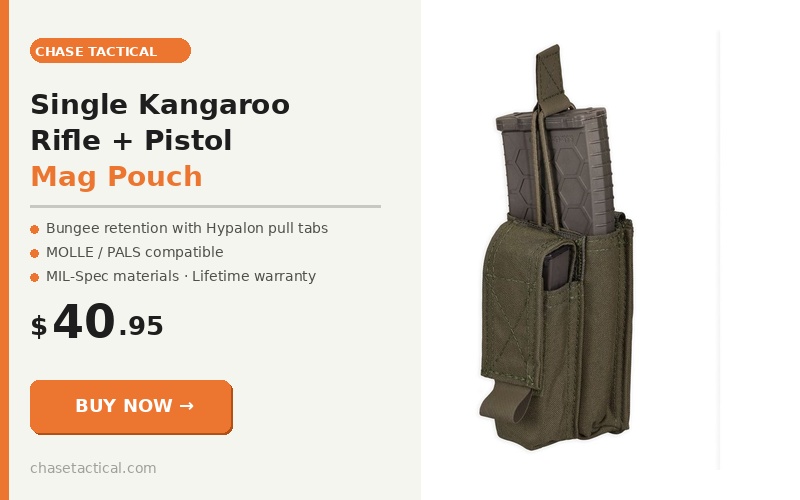
For operators running a hybrid ammunition setup, a primary rifle magazine alongside shotgun rounds or CS marker rounds, a consolidated pouch eliminates the need for separate mounting positions and keeps the front panel clean. The Chase Tactical Shotgun Mag Pouch carries one 30-round 5.56mm rifle magazine via bungee retention with Hypalon pull tabs, plus five rounds of 12-gauge shotgun or CS marker rounds secured with MIL-Spec elastic for fast access. It is compatible with all MOLLE/PALS systems and is backed by a limited lifetime warranty.
Front Panel Layout Principles
- Primary magazines: support side to centerline, numbered sequentially for instinctive access
- Pistol magazines: support side or cummerbund, accessible without interfering with rifle mag draw
- IFAK: front panel or cummerbund, accessible with one hand never buried behind other pouches
- Radio/PTT: front or non-dominant side for frequent one-handed access
- Single layer only stacked pouches push your profile outward and create snag points
Rear Panel Setup
The rear panel should carry sustainment gear items you do not need during an active engagement but require for extended operations. Secondary radios, backup supplies, hydration bladder attachment points, and admin gear belong here. Keep the rear panel slim: rear bulk shifts weight backward, throws off your center of gravity, and creates drag when moving through confined spaces or entering and exiting vehicles.
Position heavier rear-panel items as centrally as possible and as close to the body as the carrier allows. MOLLE-compatible panels on the rear provide additional attachment rows without adding structural bulk to the carrier itself. Reserve rear-panel slots for gear you can access by reaching over your shoulder.
Anything requiring you to remove the carrier to reach it should be reconsidered during the loadout. For scenario-specific rear panel configuration guidance, see our plate carrier setups for different environments guide.
Integrating the Medical Kit

Medical kit placement is one of the most critical yet frequently neglected decisions when building a mixed loadout. The IFAK must be reachable with one hand, ideally the non-dominant hand, without clearing other pouches or changing your grip. A medical kit that cannot be accessed under stress is not a medical kit; it is dead weight.
Common IFAK placement options include the front panel cummerbund attachment, the non-dominant side, or the rear cummerbund panel, depending on your carrier design. The governing principle is consistent: wherever you place it, you should be able to locate and access it by touch alone, without looking, after training the movement. Practice the reach sequence regularly so the motion is automatic.
IFAK Essentials Checklist
- Tourniquet within immediate reach, not buried inside the kit
- Trauma shears
- Compressed gauze or hemostatic agent
- Chest seal (for penetrating chest wounds)
- Nitrile gloves
According to Tactical Combat Casualty Care (TCCC) guidelines, tourniquet application within the first minutes of a penetrating extremity wound is the single most effective intervention for preventing preventable battlefield death, which is why tourniquet accessibility, not just presence, is a non-negotiable element of IFAK placement. For a broader look at configuring your full accessory setup, see our guide to choosing plate-carrier accessories for missions.
Balancing Weight Across the Full Loadout
Weight distribution determines how sustainable your loadout is over time and how efficiently you can move under load. The goal is to keep the center of gravity centered and close to your body, roughly in line with your sternum and spine, with weight balanced evenly across left and right sides and front to rear.
A front-heavy configuration creates a forward lean that strains the lower back. A rear-heavy configuration pulls the carrier backward and shifts the plates out of position. Heavier items, such as plates, a radio, and triple magazine pouches, should sit as centrally and as close to the body as possible.
Lighter accessories fill peripheral positions. Avoid overloading one side of the cummerbund; lateral imbalance affects pivoting and transitions between positions. Once your full loadout is assembled, wear it through your full range of motion, including kneeling, prone, and vehicle entry, and adjust any item that restricts movement or shifts the carrier off-center.
Testing and Refining Your Setup
No loadout configuration is final until it has been tested under realistic movement. A carrier that feels right standing still may shift, chafe, or create access conflicts the moment you add dynamic movement. Test your full configuration through the movements your mission actually requires: running, kneeling, prone positions, vehicle entry and exit, and most importantly, simulated reloads and medical access under time pressure.
Identify and address any access conflicts, pouches that block each other, straps that interfere with draws, or items that move out of position during transitions. Then run the same test again. A well-configured mixed loadout should feel like an extension of your body rather than something strapped to it. That result requires iteration, not just assembly.
Conclusion
Building an effective mixed loadout is a deliberate process, not a one-time assembly. It starts with plate selection matched to your threat environment, proceeds through proper fit adjustment, and then works outward through each panel and pouch position based on access priority and weight. The front panel carries what you need fastest. The rear panel carries what sustains you. The medical kit is placed where you can find it without having to look. Weight is distributed to keep the carrier stable and your movement efficient.
What separates a functional mixed loadout from a high-performance one is how well each decision reinforces the others. Plates that fit correctly allow the carrier to sit correctly, which in turn allows pouches to be positioned correctly, enabling reloads and medical access to occur reliably under stress. Build the foundation first, test under realistic conditions, and refine based on what you find. A mixed loadout configured with that level of discipline is one you can depend on when it counts.
Frequently Asked Questions
How do I choose the right size plate carrier?
Measure your chest at its widest point and your torso from collarbone to navel. Use these measurements against the carrier’s sizing chart. As a general fit rule, you should be able to slide two fingers between the top of the front plate and your collarbone when the carrier is properly adjusted. The cummerbund should be snug without restricting your breathing or torso rotation.
Can I use a plate carrier for non-military activities?
Yes. Plate carriers are used across law enforcement, private security, competitive shooting, and civilian preparedness roles. The configuration principles in this guide apply regardless of the context protection level matched to the threat environment, the fit adjusted for your body, and the gear placed for the access priorities of your specific use case.
How do I clean and maintain a plate carrier?
Remove all plates and detach accessories before cleaning. Brush off loose dirt from the MOLLE webbing, then spot clean soiled areas with mild detergent and a soft brush. Rinse thoroughly and air-dry completely; never machine-wash with plates inserted, and avoid direct heat or sunlight during drying. Inspect all stitching, buckles, and webbing attachment points after cleaning and before reinserting plates.
What are lightweight alternatives to steel plates?
Ceramic and UHMWPE (ultra-high-molecular-weight polyethylene) plates both offer significant weight savings over steel. Ceramic plates are the most widely used for NIJ-certified Level III and Level IV protection and are the material standard across Chase Tactical’s rifle plate lineup. UHMWPE offers the lightest weight and strong multi-hit capability at a higher price point. Both are better suited to extended wear than steel, where weight accumulates, leading to fatigue over a full operational day.