








Ceramic vs. Steel Plates: Which Is Better for Level IV? (2026)


Choosing the right body armor is critical for personal protection and tactical gear. It can be a matter of life and death. When discussing Level 4 protection, the highest rating from the National Institute of Justice (NIJ), people commonly compare ceramic and steel materials. Both are designed to stop armor-piercing rounds, but they offer different performance profiles, longevity, comfort, and cost. So, which one is better? Let’s break down everything you need to know about ceramic vs. steel plates to help you make the most informed decision.
Understanding Level IV Protection
Level 4 body armor is designed to stop armor-piercing rifle rounds, including .30-06 M2 AP (Armor Piercing) bullets. This level is often the choice of military personnel, law enforcement in high-threat environments, and civilians preparing for worst-case scenarios. The NIJ standards require that Level 4 armor stop a single hit from a .30-06 AP round with no penetration. While other levels may offer protection against common rifle rounds or handguns, Level 4 is the gold standard for ballistic protection.
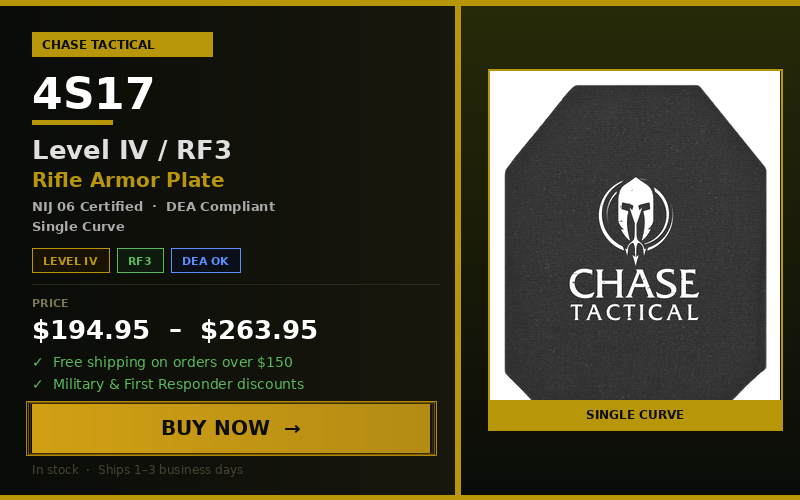
Upgrade your defense. Now shop the 4S17 Level IV Rifle Armor Plate at Chase Tactical!
What Are Ceramic Plates?
Ceramic plates are typically made from materials such as boron carbide or silicon carbide, which are chosen for their hardness and low weight. To create a Level 4 ceramic plate, manufacturers use a combination of a ceramic strike face and a softer backing material, such as polyethylene or aramid fibers. The ceramic layer fractures upon impact, dispersing the bullet’s energy, while the backing absorbs the remaining force and captures the fragments.
The result is a plate that can effectively stop high-velocity rounds with minimal backface deformation. However, ceramic plates are often considered fragile due to their structure. Despite this reputation, modern ceramics are surprisingly durable under normal use conditions.
What Are Steel Plates?
On the other hand, steel plates are made from hardened steel alloys such as AR500 or AR550. These incredibly strong and durable plates can withstand multiple rounds with a reduced risk of fracturing. Steel plates function differently than ceramics: instead of fracturing to absorb energy, the steel is so hard that it deforms the bullet upon contact, either stopping it or causing it to fragment.
This toughness comes at a costliterally and physically. Steel plates are significantly heavier than their ceramic counterparts and can transmit more force to the body due to the lack of energy-absorbing materials behind the strike face. Spalling, which occurs when a bullet fragments upon impact, is also a major concern with steel plates and must be mitigated with anti-spall coatings.
Comparing Ceramic and Steel Plates: A Closer Look
Now that we understand the core characteristics of ceramic and steel armor, it’s time to compare them. While both types can offer NIJ-certified Level 4 protection, they differ significantly in weight, comfort, durability, and overall performance. Let’s summarize how each material stacks up in the most critical categories.
| Feature | Ceramic Plates | Steel Plates |
| Weight per plate | 4 to 7 lbs | 6 to 10+ lbs |
| Multi-hit capacity | Stops the rated AP round plus limited follow-ups; protection can drop after a hit in the same area | Very tough; can absorb repeated hits depending on round type and spacing |
| Spall / fragmentation | Low; the backer captures most debris | High; requires anti-spall coating or a spall liner |
| Shelf life | No fixed expiration with proper care; sensitive to drops and rough handling | Often 20+ years; the main risk is rust |
| Typical cost (set) | Around $500 and up | About $200 to $300 |
| Best for | Mobility, comfort, lower spall risk, high-threat fieldwork | Budget builds, long-term storage, rough handling |
Weight and Comfort: Ceramic Takes the Lead
Weight is one of the most noticeable differences between ceramic and steel plates. Ceramic plates typically weigh between 4 and 7 pounds per plate, whereas steel plates can weigh between 6 and 10 pounds or more. This weight difference becomes even more pronounced when worn on both the front and back.
Steel plates may not seem burdensome in a static position. However, the weight adds up quickly for active duty personnel, especially when running, climbing, crouching, or engaging in long patrols. Over time, the extra weight of steel can lead to fatigue, reduced mobility, and even long-term joint issues. Ceramic, being lighter, allows for a better range of motion and extended wear with less physical toll.
Durability and Longevity: Steel’s Strength Shines
Durability is often where steel plates shine. You can drop them, expose them to rough handling, or store them in a car trunk without concern. They are incredibly rugged and often have a shelf life exceeding 20 years. Steel plates do not degrade over time unless they rust, which can be prevented by applying proper coatings.
Ceramic plates, in contrast, are more susceptible to cracking under rough handling. Although many are tested against drops and multiple impacts, unseen cracks can still compromise their protective capabilities. While many modern ceramic plates are built to withstand regular use, users must take greater care in handling and storage. Properly manufactured ceramic plates have no expiration.
Stopping Power: Both Are Effective, With Nuances
Both ceramic and steel plates rated as Level 4 will stop an armor-piercing round as required by the NIJ. However, the method they use differs.
Ceramic plates are typically engineered to stop one AP round and a few additional standard rounds. Their effectiveness can diminish after the first hit, especially in the same area. Steel plates, typically rated for Level 3 protection, can be upgraded or tested to meet Level 4 standards. When they are, they often can stop multiple hits without losing structural integrity, depending on the round type and spacing.
Many Level 4-rated ceramic plates are now designed to survive multiple hits and even outperform steel in some independent tests. However, it’s crucial to note that “Level 4” is only tested against one round, so any claims beyond that are manufacturer-specific.
Spall and Fragmentation: A Steel-Specific Hazard
One of the biggest downsides of steel armor is spalling and fragmentation. When a bullet hits a steel plate, it often shatters, sending shrapnel in multiple directions. Without proper anti-spall coatings or spall liners, this can be a serious risk, potentially causing lethal injuries to the neck, arms, or face.
Ceramic plates are not susceptible to this issue. When a bullet hits a ceramic plate, the round and the ceramic material break apart, and the backer layer catches most of the debris. This makes ceramic plates inherently safer for the wearer in terms of fragmentation.
Cost: Steel Is Budget-Friendly But With Trade-offs
Steel plates often appear more attractive if you’re shopping on a budget. A good set of steel plates can be found for $200–$300, while high-quality ceramic plates can easily cost $500 or more per set.
However, the cost difference narrows when you factor in the need for spall protection on steel, additional carrier support for the increased weight, and the physical toll of wearing heavy plates over the long term. Also, while ceramic plates may have a shorter shelf life, they often provide better protection and comfort.
Where Polyethylene (UHMWPE) Plates Fit In
Ceramic and steel are not the only options buyers compare. Polyethylene, specifically ultra-high-molecular-weight polyethylene (UHMWPE), is the lightest hard-armor material on the market. It often weighs only 3 to 4 pounds per plate and can even float in water. On its own, polyethylene is generally rated to Level III, which means it stops common rifle rounds but not steel-core armor-piercing threats. For true Level IV protection, polyethylene is used as a backer behind a hard ceramic strike face, pairing low weight with armor-piercing stopping power. Standalone polyethylene plates usually fall in the $250 to $400 range per plate, sitting between budget steel and premium ceramic on price.
Carrying hard armor means choosing the right carrier. Explore the full range of plate carriers at Chase Tactical to match your plates to a comfortable, mission-ready setup.
Real-World Use Cases: Which Plate Works Best for You?
- The ideal plate often depends on the operational context for civilians, law enforcement, or military users.
- Military and tactical operators prefer ceramic plates due to their weight advantage and reduced risk of spall. The ability to maneuver quickly with less fatigue is a significant tactical advantage.
- Law enforcement officers in urban environments often choose ceramic for similar reasons ease of movement, comfort, and safety.
- Prepared civilians or homesteaders may prefer steel for long-term storage and budget reasons. Steel plates are resilient and can be stored indefinitely, making them suitable for “just-in-case” scenarios.
Final Verdict: Ceramic or Steel for Level 4?
So, which is better?
Ceramic plates are the clear winner if you prioritize mobility, comfort, and lower risk of spall. They offer excellent Level 4 protection, enabling greater movement and reduced physical strain.
If you value ruggedness, multi-hit durability (in specific contexts), and long-term storage, steel plates still appeal strongly, particularly for those on a budget or seeking gear for long-term preps.
However, in modern contexts and with technological advancements, ceramic plates have largely surpassed steel in terms of practical, real-world advantages. They are the go-to for professionals who face high-risk threats and need reliable, agile protection.
Frequently Asked Questions
Can ceramic plates stop multiple rounds?
While NIJ Level 4 only requires stopping one AP round, many modern ceramic plates are designed to withstand multiple hits, though performance varies by brand and impact location.
Do steel plates always need spall protection?
Yes. Without anti-spall coatings or liners, steel plates can cause dangerous fragmentation upon impact, posing serious risks to the wearer.
How much does a ceramic plate weigh?
Most ceramic Level IV plates weigh between 4 and 7 pounds each, compared to 6 to 10 pounds or more for steel. The exact weight depends on the plate size, cut, and the specific ceramic and backing materials used.
Do ceramic body armor plates expire?
Properly manufactured ceramic plates have no fixed expiration date, but they are more sensitive to drops and rough handling than steel plates. Inspect them regularly, since hidden cracks can reduce protection even when the plate looks intact.
Are steel or ceramic plates a better value for money?
Steel plates have a lower upfront price, often $200 to $300 per set, while ceramic sets usually start around $500. The gap narrows once you add spall protection, a heavier-duty carrier, and factor in the comfort and weight savings ceramic offers over long-term wear.
Can polyethylene (UHMWPE) plates stop Level IV rounds?
Pure polyethylene plates are very light but are generally rated to Level III, not Level IV, because they cannot reliably stop steel-core armor-piercing rounds on their own. For Level IV protection, polyethylene is used as a backer behind a hard ceramic strike face.