








Advancements In Body Armor Technology: What’s New In 2026?

For centuries, body armor has been a vital component of personal protective equipment for military, law enforcement, and security personnel. Over the years, the technological evolution of body armor has kept pace with the need to balance its protective role with an aesthetic that prioritizes maximum mobility and comfort. Heading into 2026, body armor technology continues to make fantastic strides fueled by innovation in materials science, design, and engineering.
This guide breaks down the most advanced body armor technology heading into 2026, from sub-two-pound rifle plates and the new NIJ 0101.07 rifle ratings to smart sensors and liquid armor research, so you can see exactly what has changed and what it means for personal defense.
The Testing and Standards Process for Body Armor
A key aspect of developing body armor technology is rigorous testing and strict adherence to established standards. The U.S. Army, military branches, and law enforcement agencies require that body armor meet specific standards to be effective.
The United States National Institute of Justice (NIJ) defines the standards by which body armor is tested. These standards outline how the body armor is expected to perform under various conditions, including exposure to different types of ammunition, blunt trauma, and environmental factors. Law enforcement officers and military units authorize body armor that passes these standards.
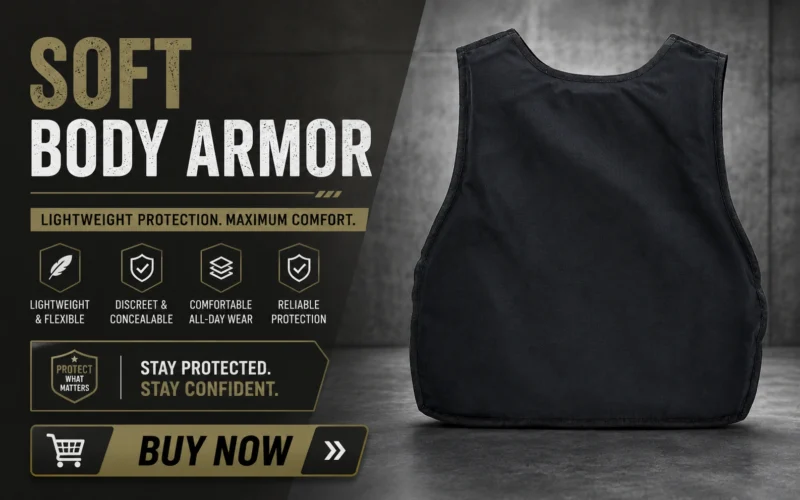
Testing body armor involves firing a range of rounds, from handgun to powerful rifle, and evaluating how well the armor stops them without harming the wearer. It also encompasses testing the material’s strength and its ability to withstand wear and tear, ensuring the armor’s efficacy over time.
The most important standards development heading into 2026 is the rollout of the updated NIJ 0101.07 standard. It replaces the older handgun-focused levels with new rifle ratings labeled RF1, RF2, and RF3, adds a 7.62x39mm mild-steel-core test threat, and is paired with a separate 0123.00 threat catalog. NIJ published the first 0101.07 Compliant Products List in late June 2026, so buyers can now compare a growing number of officially rated RF1, RF2, and RF3 plates alongside the still-active 0101.06 list. For buyers, the practical benefit is clearer, more realistic threat ratings when comparing armor systems.
How Body Armor Technology Has Evolved
Body armor has advanced far from its earliest applications in history. Initially, it was made of metal plates, thick chain mail, and other heavy materials designed to protect against arrows and swords. Today, body armor technology has undergone significant improvements, thanks in part to advancements in materials such as Kevlar and Dyneema. These have been instrumental in increasing protection at the expense of weight.
1. Revolutionary Materials in Body Armor Technology
Traditional body armor can hamper movement, speed, and endurance during stressful conditions. By 2026, the shift toward materials that provide just as much protection at a fraction of the weight is firmly established, and the latest fiber grades are pushing it further.
1.1 Ultra-High Molecular Weight Polyethylene (UHMWPE)
Ultra-high molecular weight polyethylene (UHMWPE) is one of the most outstanding materials in modern body armor. Its excellent strength-to-weight ratio has made it famous and used in military and civilian applications. UHMWPE is much lighter than conventional steel and ceramic plates, yet offers similar and sometimes better ballistic protection. Weaving UHMWPE fibers into armor designs provides greater comfort without compromising safety.
The great advantage of UHMWPE body armor is that it can stop rifle rounds at maximum velocity while remaining as light as possible. Recent UHMWPE grades have pushed this even further. Newer Dyneema laminates such as SK99, along with the soft-armor grade SB301, have trimmed panel weight by roughly 10 to 20 percent, and newer hard-armor grades have helped rifle plates fall below two pounds for single-curve RF1 protection. The result is a meaningfully lighter loadout with no loss of stopping power, which matters most for wearers who carry armor for long shifts or extended missions.
1.2 Graphene Mixture
Graphene is another standout material used in body armor technology, a one-atom-thick sheet of carbon atoms arranged in a hexagonal lattice. Integrating graphene’s strength with armor designs has opened up opportunities for ultra-thin and ultra-lightweight armor with excellent ballistic resistance. For more on graphene research and applications in protective equipment, ongoing studies continue to look at its potential across military and civilian armor systems.
1.3 Ceramic-Polymer Hybrids
This makes ceramic armor ideal for stopping armor-piercing rounds and has been used extensively. However, historically, it is brittle, often breaking open on repeated impact. New hybrid ceramic-polymer designs are emerging that combine the hardness of ceramics with the flexibility of advanced polymers.
Incorporating polymers also lightens ceramic plates; therefore, soldiers and law enforcement personnel can achieve high levels of protection without carrying the weight of traditional ceramic plates.
The three leading material families each suit different roles, which is why many modern systems combine them. The table below summarizes how they compare.
| Material | Relative weight | Typical threat role | Key traits |
| UHMWPE (polyethylene) | Lightest | Rifle threats in hard plates; soft-armor backing | Best strength-to-weight ratio and flexible, though performance can fall at very high temperatures |
| Composite ceramic | Moderate to heavy | Rifle, including armor-piercing rounds | Hardest strike face and excellent against high-velocity rounds, but more brittle under repeated multi-hit impact |
| Aramid (such as Kevlar) | Light to moderate | Handgun and fragmentation | Flexible, proven, and the backbone of soft armor and concealable vests |
2. Soft Armor vs. Hard Armor: Matching Protection Level to the Threat
With so many material options now available, the more practical question for most buyers is which protection level actually fits the threat they expect to face. Soft armor, built from aramid or UHMWPE fibers, is rated to stop handgun rounds and fragmentation while staying flexible enough for daily wear. Hard armor plates, whether ceramic, UHMWPE, or a ceramic-polymer hybrid, step up to rifle threats and are worn as inserts in a plate carrier rather than alone. Many plate carrier setups pair a soft soft armor panel with hard rifle plates for layered coverage. For a full breakdown of how each material stops a round and disperses energy, see our guide on the science behind ballistic protection.
3. New Trends in Ballistic Protective Equipment
As threats have grown far more ballistic and exponentially more complex and lethal, body armor manufacturers have focused on hardening armor systems to withstand a broader spectrum of threats and kinetic impacts. Some of the most significant improvements related to this trend for 2026 provide better protection against a wider range of threats and high-velocity rounds.
3.1 Flexible Ballistic Panels
While effective at stopping bullets, traditional hard armor is completely inflexible and, therefore, uncomfortable to wear for long periods. Flexible and durable ballistic panels deliver stronger real-world performance by combining the stopping power of hard armor with the flexibility of soft armor.
3.2 Liquid Armor Technology
Liquid armor technology is another development that has drawn renewed attention in recent years. The idea lies in non-Newtonian fluids, which react differently to applied stress. Normally, these liquids are flexible; they harden upon impact, thus dispersing the energy over a wider area. Liquid armor technology is under investigation for both military and civilian body armor applications.
Liquid armor is not necessarily heavy or obtrusive, but it offers better protection. It can be incorporated into various clothing and accessories, including vests, tactical helmets, and even tactical gloves, making it suitable for discreet yet effective coverage.
3.3 Fragmentation Protection
Lessons from recent conflicts have renewed the focus on fragmentation protection. Manufacturers are issuing broader-coverage gear that uses woven aramid to shield the limbs, neck, and groin from blast and shrapnel, the areas that a plate-only setup leaves exposed. This broad-coverage approach is now a standard part of how modern systems are configured rather than an afterthought.
4. Plate Carrier Systems
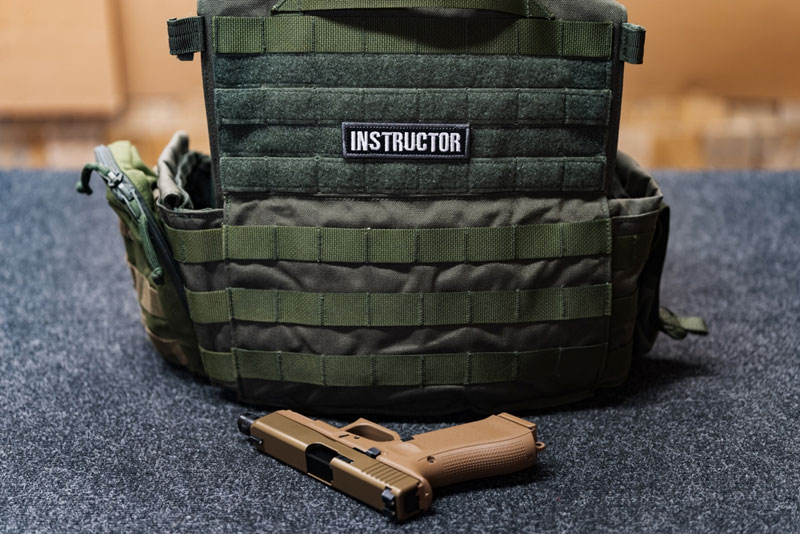
In 2026, body armor manufacturers are concentrating on improving plate carriers to improve comfort and performance for the end user.
These modern plate carriers feature a modular design that allows for multiple loadouts to be built based on the specific mission or threat level as required. Improvements such as quick-release systems, adjustable straps, and padding are found in newer plate carriers.
5. Smart Body Armor: Internet of Things and Technology Insertion
Wearable technology is bringing new designs to body armor. With enhanced situational awareness, real-time health monitoring, and even automated threat detection, smart body armor is expected to become more prevalent in the years leading up to 2026.
5.1 Health Monitoring Systems
Health monitoring systems are among the most exciting technologies to integrate into smart body armor. Sensors within the armor can monitor body temperature, heart rate, and blood pressure, providing real-time data to command headquarters or medical teams, enabling them to respond immediately to injuries or medical emergencies.
5.2 Embedded Communications
Built-in communication technology is another essential feature for smart body armor in 2026. This characteristic, which enables wireless systems integration within its body armor, will facilitate easy, walkie-talkie-like team communication and a Molle pouch without requiring radios or headsets.
These technologies can benefit secretive operations or high-pressure situations requiring silent communication.
5.3 Augmented Reality (AR) Integration
Augmented reality is also slowly making its way to body armor systems. Some of the advanced body armor designs for 2026 will feature AR capabilities that enable real-time data overlays and situational awareness through HUDs. These users will be able to receive live updates about potential threats, mission objectives, and environmental conditions without needing to look away from the action.
6. Lightweight Armor for Everyday Use
As mentioned above, most of the advancements in body armor technology are associated with military or police applications. Still, civilians are increasingly demanding light and concealable armor.
6.1 Concealable Armor for Civilians
A leading trend is inconspicuous, hideable body armor. There have been strides in lightweight, flexible designs that allow armor to be worn under clothing without attracting attention. Such armor protects against standard handgun threats and is suitable for individuals working in high-risk areas or professions with potential dangers.
6.2 Fashionable and Functional Armor Designs
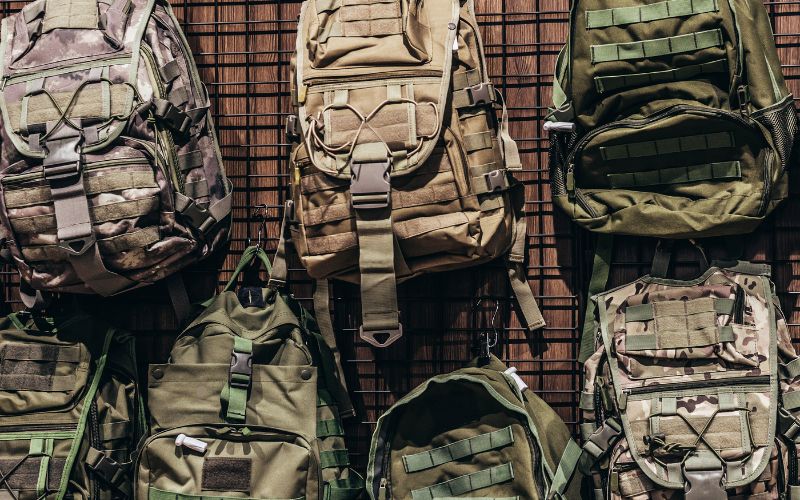
With the ever-growing demand for civilian armor, manufacturers have invested in design improvements, developing functional and aesthetically pleasing armor. Body armor is no longer limited to bulky vests; it now appears in jackets, hoodies, and even backpacks. This design provides individuals with protection without compromising on style or comfort.
Protection Levels Explained: Which Body Armor Is the Strongest?
For military personnel, law enforcement officers, and security professionals, choosing the right protection level starts with matching the armor plates to the threat and mission requirements, not just picking the newest material. The active reference standard is still NIJ 0101.06, which defines five protection levels: IIA, II, IIIA, III, and IV. Soft armor plates at Level II and Level IIIA are rated for handgun rounds, with Level IIIA stopping higher-velocity handgun and submachine gun threats and remaining the most common choice for concealable, everyday wear. Hard armor plates at Level III and Level IV step up to rifle threats, with Level IV generally considered the strongest NIJ-certified rating available, built to defeat armor-piercing rifle rounds that lower levels cannot stop.
The newer NIJ 0101.07 standard renames these threat levels as it rolls out: HG1 and HG2 replace the handgun-rated levels, and RF1, RF2, and RF3 replace the rifle-rated levels, with RF3 sitting at the top of the scale much like Level IV does under the older system. Because certification to 0101.07 only began appearing on the Compliant Products List in June 2026, most armor plates on the market today are still labeled and certified under the familiar Level II through Level IV naming, and buyers can expect both systems to run side by side for the next few years.
How Body Armor Became Standard-Issue Protection
Modern body armor technology traces back further than most people expect. Early metal plates and chain mail gave way to the flak vests of the World Wars, which used steel plates and layered ballistic nylon to protect against shrapnel rather than direct rifle fire. The real turning point came in 1965, when DuPont chemist Stephanie Kwolek invented Kevlar, a synthetic fiber with a strength-to-weight ratio far beyond anything available at the time.
Recognizing its potential for ballistic protection, the National Institute of Justice began researching lightweight, wearable body armor in the early 1970s and published its first ballistic-resistant body armor performance standard in 1972. Field tests with Kevlar vests across a group of urban police departments in 1975 proved the concept, and by the late 1970s, Kevlar-based soft armor had become standard issue for a large share of U.S. law enforcement agencies. That original NIJ testing and certification framework is the direct ancestor of the 0101.06 and 0101.07 standards that govern body armor certification today.
The Future of Body Armor Technology: What Comes After 2026
The next wave of body armor technology builds directly on what is already in testing today rather than a single dramatic leap. As more manufacturers complete NIJ 0101.07 certification testing, expect the current handful of RF-rated rifle plates to expand into a much larger Compliant Products List, giving buyers more certified, apples-to-apples options than the transitional period allows right now.
On the materials side, graphene and liquid armor are likely to move from research and limited prototypes toward fielded products as manufacturing costs come down, building on the weight reductions that UHMWPE grades like SK99 and SB301 have already delivered. Smart body armor is expected to consolidate its separate features, health monitoring, embedded communications, and AR situational awareness, into a single connected system rather than add-on components, giving command staff and medical teams one data stream instead of several. Every additional gram saved also matters for wearer fatigue: as rifle plates continue trending below two pounds, security professionals who spend long shifts in a plate carrier stand to benefit the most from that ongoing weight reduction.
Shop the Latest in Body Armor Technology
Ready to put this year’s advancements to work? Chase Tactical carries RF-rated rifle plates built around the newer, lighter UHMWPE and ceramic-hybrid grades covered above, Level IIIA soft armor for concealable, everyday protection, and lightweight plate carriers designed for long shifts and extended missions. Browse the full body armor collection to find the setup that matches your threat level.
Frequently Asked Questions
What Is the Most Advanced Body Armor Technology Available Today?
As of 2026, the most advanced body armor technology combines newer UHMWPE laminates such as Dyneema SK99 and the soft-armor grade SB301 with ceramic-polymer hybrid plates, graphene-reinforced designs, and smart armor that adds health monitoring, embedded communications, and AR situational awareness. Together, these have pushed rifle plates below two pounds for single-curve RF1 protection while preserving full ballistic performance.
Is Liquid Body Armor a Real Technology?
Yes. Liquid armor uses non-Newtonian fluids that stay flexible under normal conditions but harden instantly on impact, spreading the force of a hit over a wider area. It is still under investigation for military and civilian use rather than in widespread production, and it can be incorporated into vests, helmets, and gloves for discreet coverage.
What Are the Flagship Materials in Advanced Body Armor?
As of 2026, the leading materials are ultra-high-molecular-weight polyethylene (UHMWPE) grades such as Dyneema SK99 and the newer SB301 soft-armor grade, advanced aramids, composite ceramics, and emerging graphene and carbon-nanotube composites. These deliver high strength-to-weight ratios, with some new soft-armor layers cutting panel weight by 10 to 20 percent and rifle plates dropping below two pounds while preserving ballistic protection.
How Is Body Armor Integrating Smart Technology?
The newer smart body armor has incorporated features, including human health monitoring, embedded wireless communication tools, and even augmented reality (AR). These technologies enable greater situational awareness, superior communication, and real-time health data for the wearer in high-risk environments.
What Is Kevlar Used for in Current Body Armor?
Kevlar is key in contemporary body armor due to its exceptional strength and toughness. As a lightweight yet resilient material, Kevlar is used in multiple layers in bullet-resistant vests, protecting against high-speed projectiles. Its ability to stop handgun and certain rifle bullets while remaining flexible makes Kevlar fundamental in body armor construction.
How Is Body Armor Tested for Safety and Efficacy?
Body armor is tested against standards set by the National Institute of Justice (NIJ). The current NIJ 0101.07 standard introduced new RF1, RF2, and RF3 rifle ratings, retired older handgun levels, and added a 7.62x39mm mild-steel-core test threat. Testing fires multiple rounds at the armor and measures penetration and backface deformation to confirm it protects the wearer.