





Tactical Self Defense Gear: Top Picks and Ultimate Buying Guide 2026

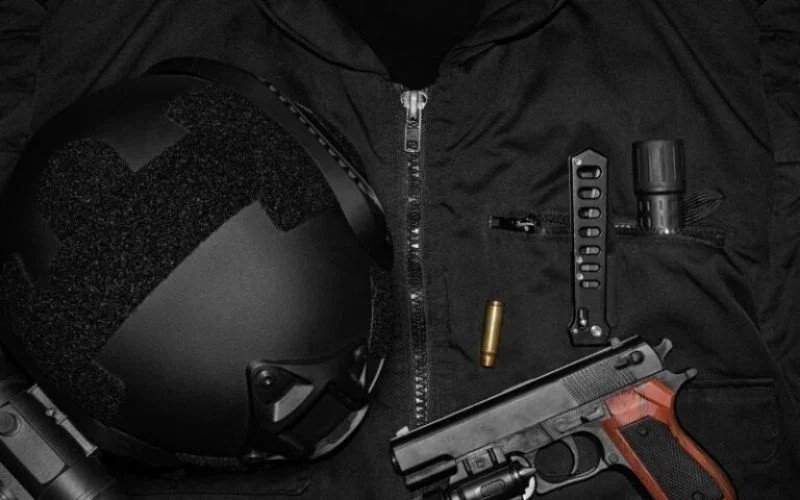
In a world where personal safety can be a growing concern, the importance of being prepared cannot be overstated. Whether walking alone at night, traveling to unfamiliar areas, or simply wanting to feel secure daily, having the right self-defense gear can make all the difference. Tactical self defense gear has become increasingly popular due to its effectiveness, reliability, and adaptability. This guide will explore essential tactical self-defense gear to consider for personal protection.
Why Tactical Gear Matters for Home Defense and Personal Readiness?
Tactical equipment is vital for home protection and personal preparedness, as it enhances safety, effectiveness, and response time during emergencies. High-quality equipment, body armor, boots, tactical helmets, holsters, flashlights, tactical vests, and communication devices keep you ready for any threat, from burglary to calamities. From bags and pouches to sophisticated radio communications and surveillance equipment, these items offer an important shield between you and possible intruders.
What is the Essential Tactical Gear for Self-Defense?

Tactical gear, often associated with military or law enforcement use, refers to military equipment designed for high performance, durability, and practicality. While traditionally used in professional settings, these items have become more accessible to civilians seeking to protect themselves. Whether you live in an urban area, frequently travel alone, or are concerned about home security, there’s tactical gear tailored to suit your situation.
Tactical Self Defense Gear: Quick Reference
| Gear Type | Effective Range | Lethal? | Legal Notes |
| Pepper Spray | Up to 10-15 ft | No | Legal in all 50 states with age/size restrictions |
| Stun Gun / Taser | Contact / up to 15 ft | No | Restricted in some states – verify locally |
| Tactical Knife | Close range | Potentially | Blade length laws vary by state and city |
| Tactical Flashlight | Up to 15 ft (blinding) | No | Legal everywhere – no restrictions |
| Baton | Close range | No | Expandable batons restricted in some states |
| Body Armor | N/A (passive) | No | Legal for civilians in most states |
| Personal Alarm | Audible range | No | Legal everywhere – no restrictions |
1. Tactical Flashlights: Illuminating Your Path To Safety
A tactical flashlight is one of the most versatile and essential pieces of self-defense gear. Unlike regular flashlights, tactical flashlights are designed to be more durable and brighter, often featuring strobe functions or beveled edges for self-defense.
Why You Need It
- Blinding Potential Threats: The intense brightness of a tactical flashlight can temporarily blind an attacker, giving you precious seconds to escape.
- Durability: Flashlights are built to withstand harsh conditions, making them reliable in emergencies.
- Multi-functionality: Many tactical flashlights include features like strobe lights or can be used as an improvised striking tool.
2. Pepper Spray: A Reliable And Non-Lethal Defense Tool
Pepper spray is a widely utilized self-defense aerosol for its accessibility, ease of deployment, and efficacy. It comprises capsaicinoids, the active components derived from chili peppers. Capsaicinoids induce severe ocular and respiratory effects upon exposure, including intense pain, temporary vision impairment, and respiratory distress.
Pepper Spray Formula Types:
- Stream: Accurate, less affected by wind, longest range – best for outdoor use
- Gel: Sticks to the attacker’s face, reduced blowback risk – good for indoor environments
- Fog/Cone: Widest coverage area – useful when facing multiple threats
Why You Need It
- Non-lethal: Pepper spray provides an effective means of defense without the risk of lethal harm.
- Ease of Use: It’s simple to deploy, even under stress, making it ideal for quick responses.
- Range: Pepper spray typically encompasses a range of up to 10 feet, enabling individuals to maintain a secure distance from potential assailants.
3. Tactical Knives: The Ultimate Close-Combat Tool
A knife is a powerful self-defense tactical tool for emergencies, especially in close-combat situations. These knives are designed for durability and effectiveness, with features such as serrated edges, finger guards, and easy-grip handles.
Legal Note: Tactical knife legality varies by state. Most states allow folding knives under 3-4 inches for concealed carry. Fixed blades are typically legal for open carry only. Switchblades and automatic-opening knives are restricted in many states. Always verify your local laws before carrying.
Why You Need It
- Versatility: Beyond self-defense, tactical knives can be used for various survival situations, such as cutting through obstacles or preparing food.
- Durability: Made from high-quality materials, these knives are built to last and perform in tough conditions.
- Compactness: Many tactical knives are foldable and compact, making them easy to carry discreetly.
4. Stun Guns And Tasers: Disabling The Threat
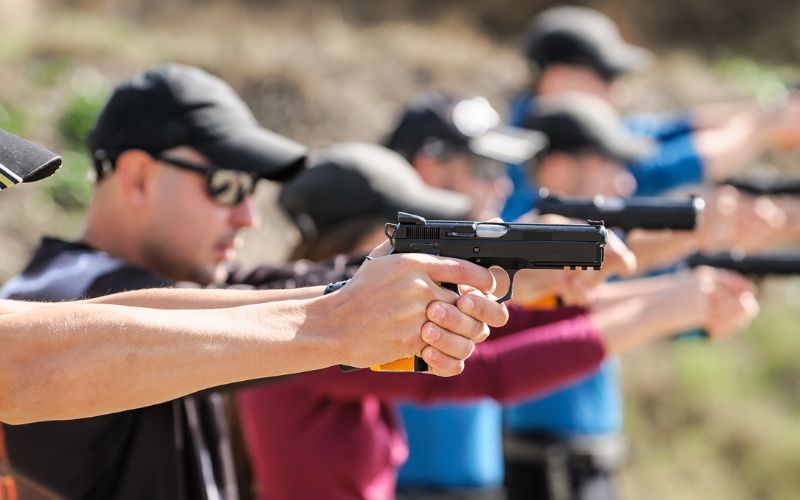
Many people choose stun guns and tasers for self-defense because they are non-lethal, and they must have tactical gear for survival situations. These tools use electric shocks to temporarily stop an attacker so that you can get away and find help.
Stun Gun vs. Taser: A stun gun requires direct physical contact with the attacker to deliver the shock. A Taser fires two barbed probes connected by wires up to 15-25 feet, delivering the shock from a safe distance. Tasers are more expensive and may require permits in some states but allow you to keep a distance from the threat.
Why You Need It
- Immediate Incapacitation: A well-placed shock can instantly disable an attacker, giving you time to flee.
- Non-lethal: Like pepper spray, these tools offer a non-lethal way to defend yourself.
- Easy to Use: Stun guns and tasers are designed for quick, intuitive use, even in high-stress situations.
5. Body Armor: Shielding Yourself from Harm
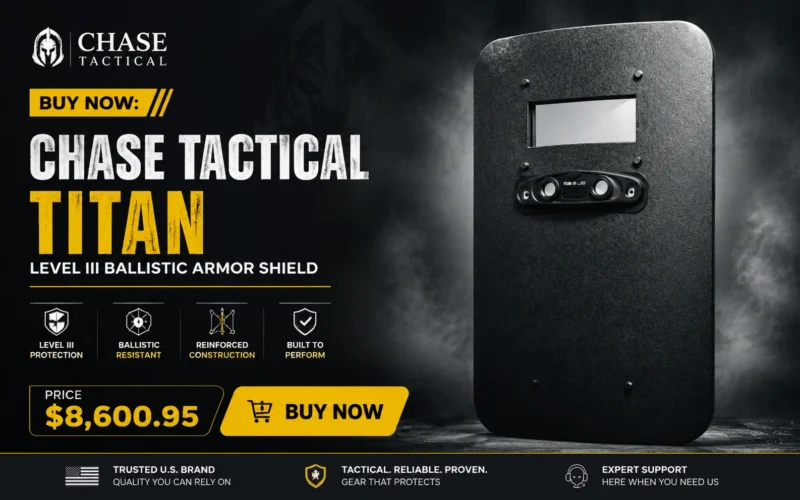
Body armor isn’t just for military or law enforcement personnel; it’s an increasingly popular option for civilians concerned about personal safety. Different types of body armor can provide life-saving protection at various threat levels.
For most civilians, a concealable Level IIIA soft armor vest worn under clothing is sufficient – it stops handgun threats while remaining lightweight for daily wear. For higher-risk scenarios, a plate carrier with Level III or Level IV hard plates provides rifle-rated protection. See Chase Tactical’s body armor levels guide to match the right protection to your threat environment.
Why You Need It
- Protection from Projectiles: Body armor works effectively against bullets, stab wounds, and other forms of physical assault.
- Peace of Mind: Knowing you have an added layer of protection can boost your confidence in potentially dangerous situations.
- Variety: Body armor comes in various levels of protection, from lightweight vests to more robust options, allowing you to choose based on your needs.
6. Tactical Gloves: Enhancing Grip And Protection
Tactical gloves are an often-overlooked piece of self-defense gear that can provide significant benefits. These gloves protect your hands while enhancing your grip on other tactical tools, such as knives or flashlights.
Why You Need It
- Hand Protection: Protecting your hands is crucial in a self-defense situation. Tactical gloves can shield you from cuts, abrasions, and impacts.
- Improved Grip: These gloves’ enhanced grip can make wielding other defensive tools easier.
- Multi-purpose: Tactical gloves are versatile and can be used for various tasks, from self-defense to outdoor activities.
7. Batons: Impact Deterrence and Distance Control
The baton is one of the most effective close-range self-defense weapons for creating distance without escalating to lethal force. Expandable (ASP-style) batons collapse for EDC carry and extend with a single wrist motion, giving you reach advantage over an unarmed attacker.
Why You Need It
- Reach advantage: A 21-inch extended baton keeps an attacker at a distance while you create an escape opportunity
- Compact carry: A collapsed expandable baton fits in a jacket pocket, bag, or glove compartment
- Non-lethal force option: Fills the gap between verbal de-escalation and lethal force
Legal Note: Expandable batons are restricted or banned for civilian carry in California, Massachusetts, and New York. Always verify your state and local laws before purchasing.
8. Self-Defense Keychains: Small, Simple, Effective
Self-defense keychains are compact, easy-to-carry tools that can pack a surprising punch. They often feature pointed ends, knuckles, or other elements to enhance one’s ability to strike an attacker. Note that brass knuckle-style keychains are classified as brass knuckles in several states including California, Michigan, and Illinois – always verify your local laws before carrying.
7. Self-Defense Keychains: Small, Simple, Effective
Self-defense keychains are compact, easy-to-carry tools that can pack a surprising punch. They often feature pointed ends, knuckles, or other elements to enhance one’s ability to strike an attacker.
Why You Need It
- Portability: These keychains are small enough to be carried everywhere, ensuring you’re always prepared.
- Ease of Use: They’re straightforward, requiring no special training.
- Surprise Factor: An attacker may not expect such a small object to be capable of causing significant harm, giving you an advantage.
9. Personal Alarms: Drawing Attention When You Need It Most
A personal alarm is a compact, mobile gadget that emits a high-decibel siren when activated. It aims to draw attention to your situation, potentially scaring off an attacker or attracting help.
Why You Need It
- Non-violent: A personal alarm is an excellent option if you prefer a non-violent method of self-defense.
- Attention-Grabbing: The loud noise can deter attackers and alert others to your need for help.
- User-Friendly: Personal alarms are easy to carry and activate, making them accessible to everyone.
Legal Considerations for Tactical Self-Defense Gear
Before purchasing any tactical self-defense gear, it is essential to understand the laws in your state and municipality. What is legal in one state may be restricted or banned in another.
- Pepper spray: Legal in all 50 states for civilians 18 and older. Some states restrict canister size and OC concentration.
- Stun guns and Tasers: Legal in most states, banned or restricted in Hawaii, Rhode Island, and some municipalities.
- Tactical knives: Folding knives under 3-4 inches are legal for concealed carry in most states. Switchblades are restricted in many states.
- Expandable batons: Illegal for civilian carry in California, Massachusetts, New York, and several other states.
- Body armor: Legal for civilian ownership in all states except Connecticut (requires in-person purchase). Federal law prohibits ownership by convicted violent felons.
Training: Getting the Most From Your Gear
Owning tactical self-defense gear is only half of the equation. A tool you have never practiced deploying under stress will be slower and less effective when you need it. At a minimum, practice the draw and activation sequence for every tool you carry until it is fast and automatic. For tactical knives and batons, formal training from a qualified instructor is advisable before carrying for self-defense purposes.
Situational awareness – learning to recognize developing threats before they materialize – is the most important skill in any self-defense system and costs nothing.
Conclusion: Choosing The Right Tactical Gear For You
When it comes to self-defense, being prepared is the best strategy. Tactical gear offers a range of tools designed to protect you in various situations. From tactical flashlights and knives to pepper spray and personal alarms, the options are vast, allowing you to choose what best suits your lifestyle and concerns.
Before purchasing any tactical gear, consider the legal implications in your area, as some items may be restricted or require permits. Additionally, practice using your gear to ensure you can deploy it effectively in an emergency.
Chase Tactical is a veteran-owned, U.S.-based manufacturer of NIJ-certified body armor and tactical gear – tested and used by the DoD, military, and law enforcement worldwide. Browse the full protective gear catalog or contact the team for guidance on the right setup for your specific needs.
Frequently Asked Questions
How Is A Stun Gun Different From A Taser?
Both stun guns and tasers deliver electric shocks to incapacitate an attacker, but they work differently. A stun gun requires direct contact with the attacker, while a taser can be used from a distance by firing projectiles that deliver the shock. Tasers are typically more expensive and may require special permits.
How Do I Choose The Right Tactical Gear For My Needs?
Choosing the right tactical gear depends on your environment, lifestyle, and specific concerns. When considering options, consider how easy they are to use and move around, and any legal rules that might apply.
What is the best tactical self-defense gear for everyday carry?
For most civilians, the best everyday carry setup combines three tools: a compact pepper spray in a pocket or bag holster, a tactical flashlight with strobe mode, and a personal alarm. All three are legal everywhere in the United States, require minimal training, and can be carried daily without inconvenience.
Is training required to use tactical self-defense gear?
No formal training is legally required to carry most tactical self-defense gear, but training is strongly recommended for effective use under stress. At a minimum, practice the draw and activation sequence for every tool you carry until it is fast and automatic. For tactical knives and batons, formal instruction is advisable.
How much does tactical self-defense gear cost?
Personal alarms typically cost $10-25. Pepper spray runs $15-50. Stun guns range from $30-100; Tasers from $100-500. Tactical knives run $30-200. Body armor ranges from $300-800 for a Level IIIA soft vest to $150-650 per hard armor plate. A complete civilian setup covering all major tool categories can be built for $300-600.